voight-kampff

20 HP · controller

A timing test you play with one finger. Tap the big key along to the clock and how early or late each tap lands comes out as voltage, so your own feel becomes modulation. Too perfect for too long, the way a sequencer taps, and REPLICANT fires.

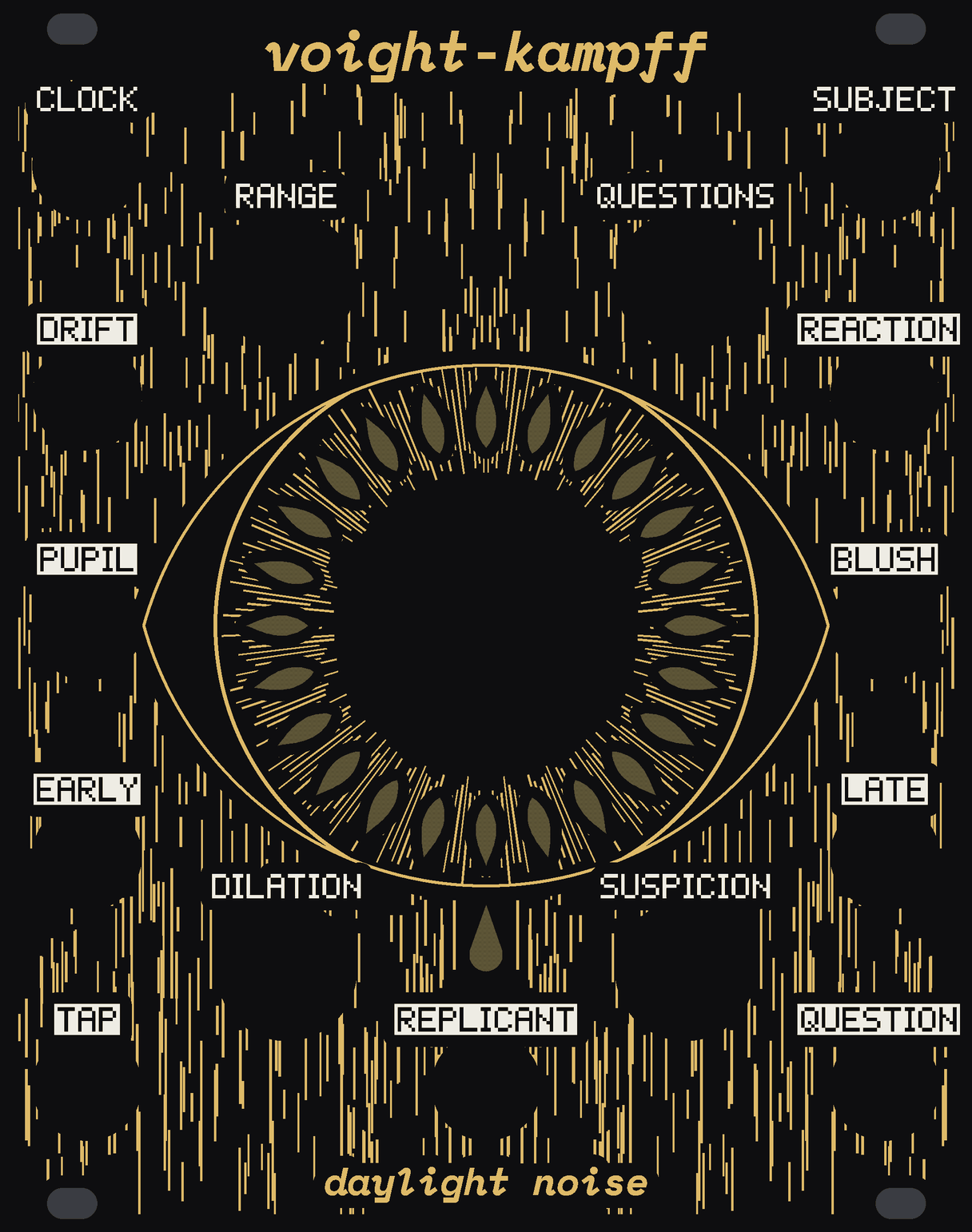
The VOIGHT-KAMPFF panel: black and gold, an eye in the rain at its middle. The big key is its pupil and its iris a ring of 24 windows of bare circuit board, with one more window, a drop, under it. White labels: CLOCK and SUBJECT at the top corners; RANGE, QUESTIONS, DILATION and SUSPICION on the eye's diagonals; DRIFT, PUPIL, EARLY and TAP down the left; REACTION, BLUSH, LATE and QUESTION down the right; REPLICANT at the foot. voight-kampff at the top, daylight noise at the bottom.

Turn a knob: drag it, roll the wheel over it or use the arrow keys; a double click puts it back. The key is there to tap along to the beat: with the pointer, or Space when it's focused.

The test is VOIGHT-KAMPFF's own. The drums, the bass, the pad and the glass it plays are made in the page as you listen. Tap on what you hear: the page allows for your speakers' delay.

example patches

The lights, the timing and the outputs here are VOIGHT-KAMPFF's engine as it's designed, running in your browser: every tap measured to a fraction of a millisecond. The subject and everything round it are a stand-in for a rack.

Tapping

CLOCK takes the beat, and every tap, on the key or a gate at SUBJECT, is measured against it: how early or late it landed against the nearer beat, to a fraction of a millisecond. That's DRIFT, held until the next tap, so the way you play becomes a voltage the rest of the rack can follow.

The iris round the key shows each tap: a bar from 12 o'clock to where it landed, clockwise for late and anticlockwise for early, half the ring each way being RANGE.

Questions

Turn QUESTIONS up and the key asks instead: its light comes on at a random moment, and the next tap answers it. The iris counts round while it waits, so you can see how long you took.

Too perfect

Tap too evenly for too long, the way a sequencer taps, and REPLICANT goes high and the drop under the eye lights. One tap outside the window, or four beats without one, and it falls.

The panel

Twenty HP, every part on the line's staggered grid and mirrored about the middle. The key is a 24 mm button with a smoked acrylic cap and an amber light inside: dark, it's the pupil of an eye. Its iris is 24 windows of circuit board lit from behind, the beat at 12 o'clock, and under the eye is one more, a drop, lit while REPLICANT is high.