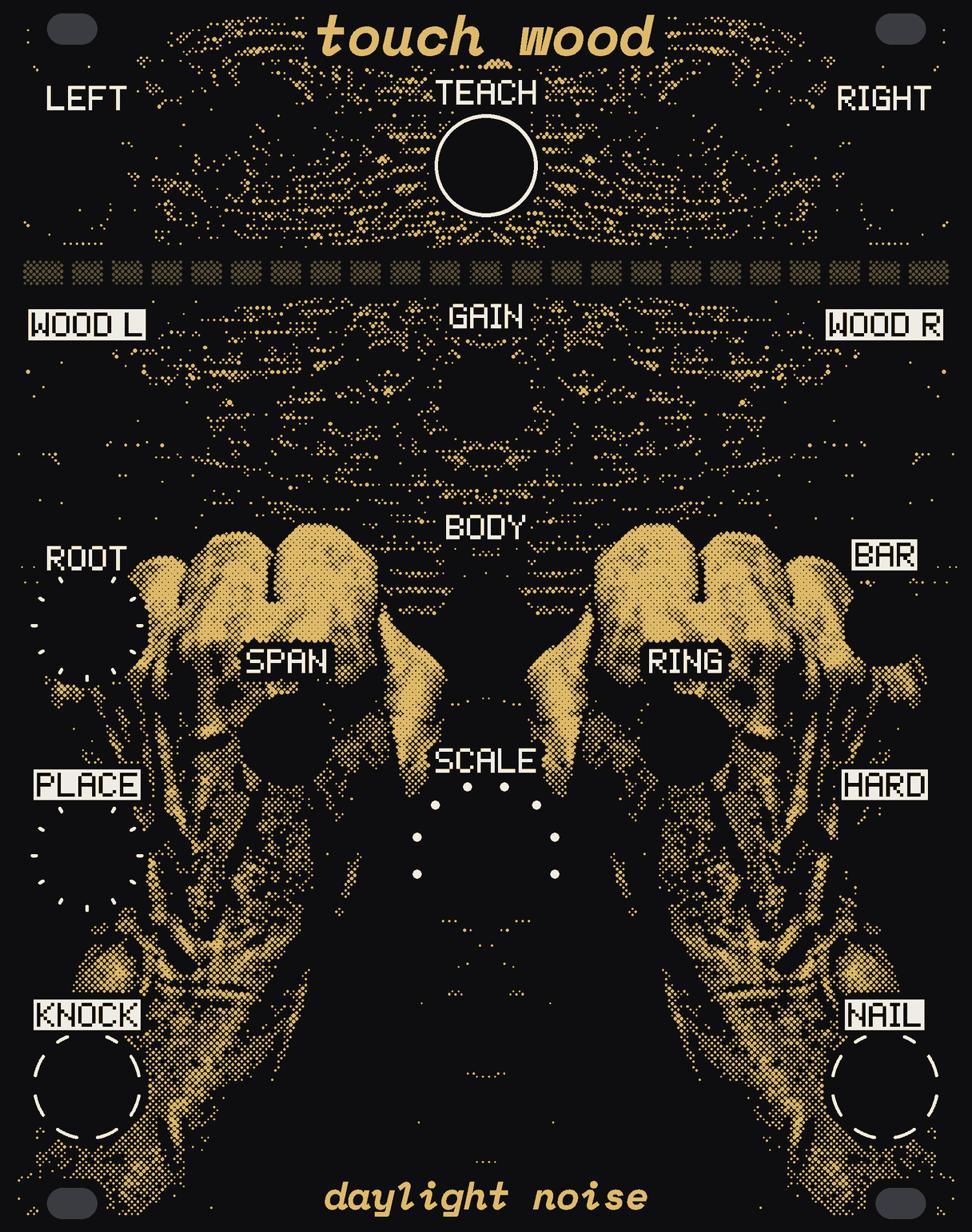
Knock: click or tap the surface; come down on it fast for a harder knock. Pick what you knock with above it, and what the pucks are stuck to. Rub: drag on it. From the keyboard: on the surface, A to semicolon knock at ten places from left to right, Shift for a fingernail; the arrow keys move a mark and Space knocks there. TEACH is a button: press it, then knock each end once. Turn a knob: drag it or tap either side of it, roll the wheel over it or use the arrow keys; a double click puts a knob back. SCALE clicks from stop to stop. The patches step on by themselves until you touch something.
example patches
The real one has two contact mics stuck to your furniture. A browser can't feel your desk, so here the surface is a model: how fast a knock runs through it and how it spreads, highs ahead of lows, its echoes off the edges and its ring, and what each thing you knock with does to it. What the module does with the two signals that come out is its engine as designed: it times them to find the place, here as it would on a real desk. The beat and the bass are a stand-in for the rest of a rack.