then

20 HP · sequencer

You can't patch the future. You have to change the past. Plant hits in PAST and each grows a family in NOW and FUTURE, the same way every time, its line lit up a tree; pull one out and the whole line goes dark.

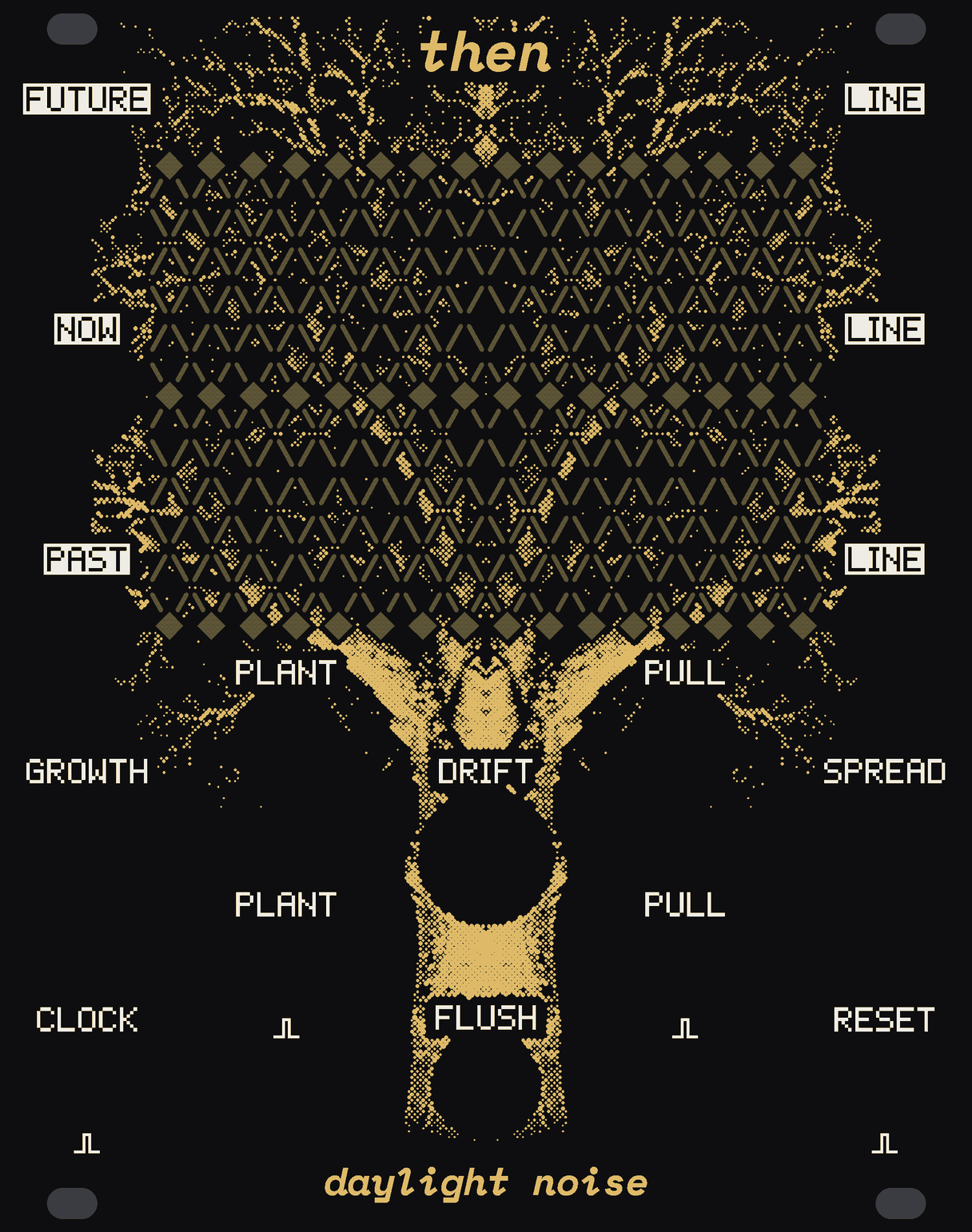
The THEN panel: black, with a bare tree in gold dots, its trunk rising up the middle from the foot and its crown spread behind three rows of sixteen small diamond windows of bare circuit board, a lattice of fine path windows between the rows. FUTURE, NOW and PAST outs down the left, three LINE outs down the right; PLANT and PULL buttons under the rows; GROWTH, DRIFT and SPREAD across the middle; PLANT and PULL ins, CLOCK, FLUSH and RESET at the foot. then at the top, daylight noise at the bottom.

Turn a knob: drag it, roll the wheel over it or use the arrow keys; a double click puts it back. PLANT, PULL and FLUSH are buttons to press, or hold. The patches step on by themselves until you touch anything.

The rows, the paths and their lights are THEN's own. The drums, the bass, the voice, the lead and the pads playing its outs are made in the page as you listen.

example patches

The rows, the families, the paths and every out here are THEN's engine as it's designed, running in your browser. The clock, the drums, the voices and the pads are a stand-in for the rest of a rack.

Writing the past

Three rows of sixteen steps, one playhead through all three. PAST, at the foot, is the only row you write: you plant hits in it as the playhead passes, and pull them out. Nothing on the panel writes to NOW or FUTURE.

How it grows

Every hit in PAST grows children in NOW, and they grow theirs in FUTURE, up lit paths you can watch. Where they land comes from where their parent stands and nothing else, so the same PAST always grows the same NOW and FUTURE, and moving one hit changes only its own line. Children that land on one step are one hit, an accent.

Sending it back

The future can't be touched. It can be sent back.

What comes out