you can't hurry it
20 HP
It's frozen: whatever you last fed it is locked in a plate of black ice. Put your thumb on the plate and hold it there. Nothing happens. A few seconds on, the heat of your hand gets through, and that band of the sound creaks, sags, drips and runs. Let go and it takes twenty seconds to set again, around whatever's playing.
Turn a knob: drag it or tap either side of it, roll the wheel over it or use the arrow keys; a double click puts it back. Warm it: press and hold the plate, low notes at its foot and high ones at its head, and wait. Two fingers work. A quick tap is a knock. Or tab to it: the arrows move along it, Space held is your thumb. The patches step on by themselves until you touch something.
example patches
Everything THAW does here is its engine as designed, running in your browser, and the plate's heat is worked out from real numbers for a thumb on thin board: on the module it comes from twelve sensors under the gold. The band is a stand-in rack.
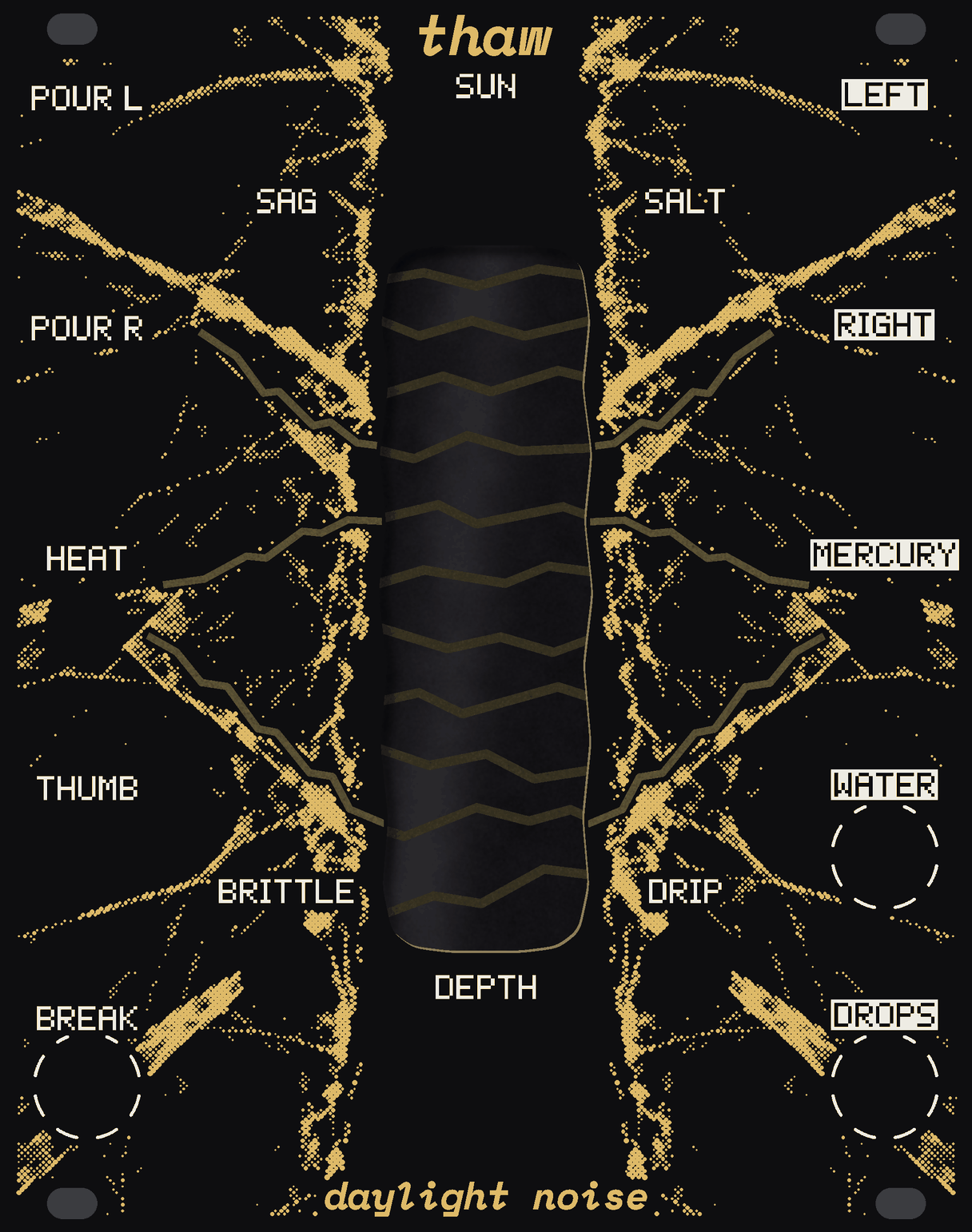
Twelve floes of bare gold under black ink, split by real cracks, sunk into the panel where a thumb goes. Each floe is a band of the sound, low at the foot, high at the head, with a temperature sensor under it. The ink clears where it's warm, so your thumb leaves a print, and it's the same heat the sensors read. There's no touch sensor. Heat is the only way in.
It takes three or four seconds for a thumb to start a floe going and ten or so for it to be water, and the heat creeps across the cracks slowly. Lift off and the ice is closing for up to twenty seconds, each piece setting as it cools, and your print stays about twice as long. A hot cup thaws it at once. An ice cube freezes it hard, and hard ice is brittle.
Each floe holds its band frozen. Warm it and it lets go a little at a time, each piece into the live sound, and when it cools each piece sets on whatever was playing at that moment, so what freezes is a passage and not an instant.