a night drive in four chords
20 HP
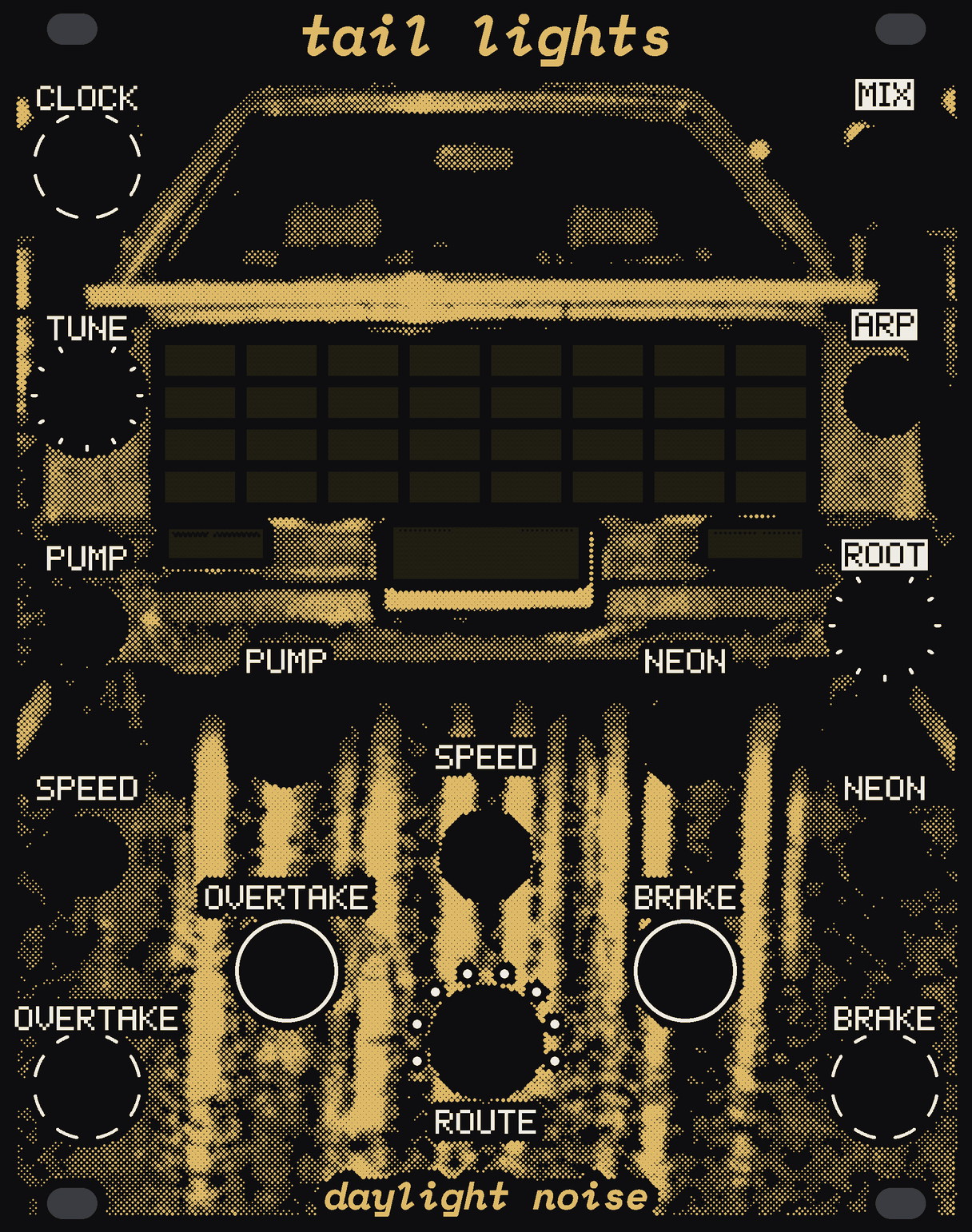
Give it a clock and it plays big, glossy chords that pump on the beat, a loop of four. Turn SPEED and it pulls away, from held chords to a racing arpeggio. ROUTE picks the road. Patch ROOT into a bass and you've got a band.
Turn a knob: drag it or tap either side of it, roll the wheel over it or use the arrow keys; a double click puts it back. SPEED, the big one in the middle, is how busy it plays: held chords fully left, a racing arpeggio fully right. ROUTE clicks through its eight roads. Press OVERTAKE (or a key) for a lift; hold BRAKE down to stop the tape. The patches step on by themselves until you touch anything.
example patches
Everything TAIL LIGHTS does here is the module's own engine, the one in its firmware, running in your browser: the chords and how they move, its four speeds, the pump, the filter and the chorus, the lift and the tape stop. The drums and the bass round it are a stand-in rack.
A beep on its own is a beep. What makes a patch sound like a song is usually underneath it: chords (several notes played at once, which give music its mood), moving every bar, in time with the drums. They're the hardest part to get out of a rack, because each note needs its own voice and somebody has to know which notes go together.
TAIL LIGHTS does that part. Give it a clock, a pulse on every beat, and it plays a loop of four chords, one a bar, in big detuned saw voices through a filter and a chorus: the warm, glossy sound of a night drive in an old film. On every beat the chords duck and swell back, the pump you hear in French house. No theory needed: the notes are always ones that go together, and each chord slides into the next by the shortest way.
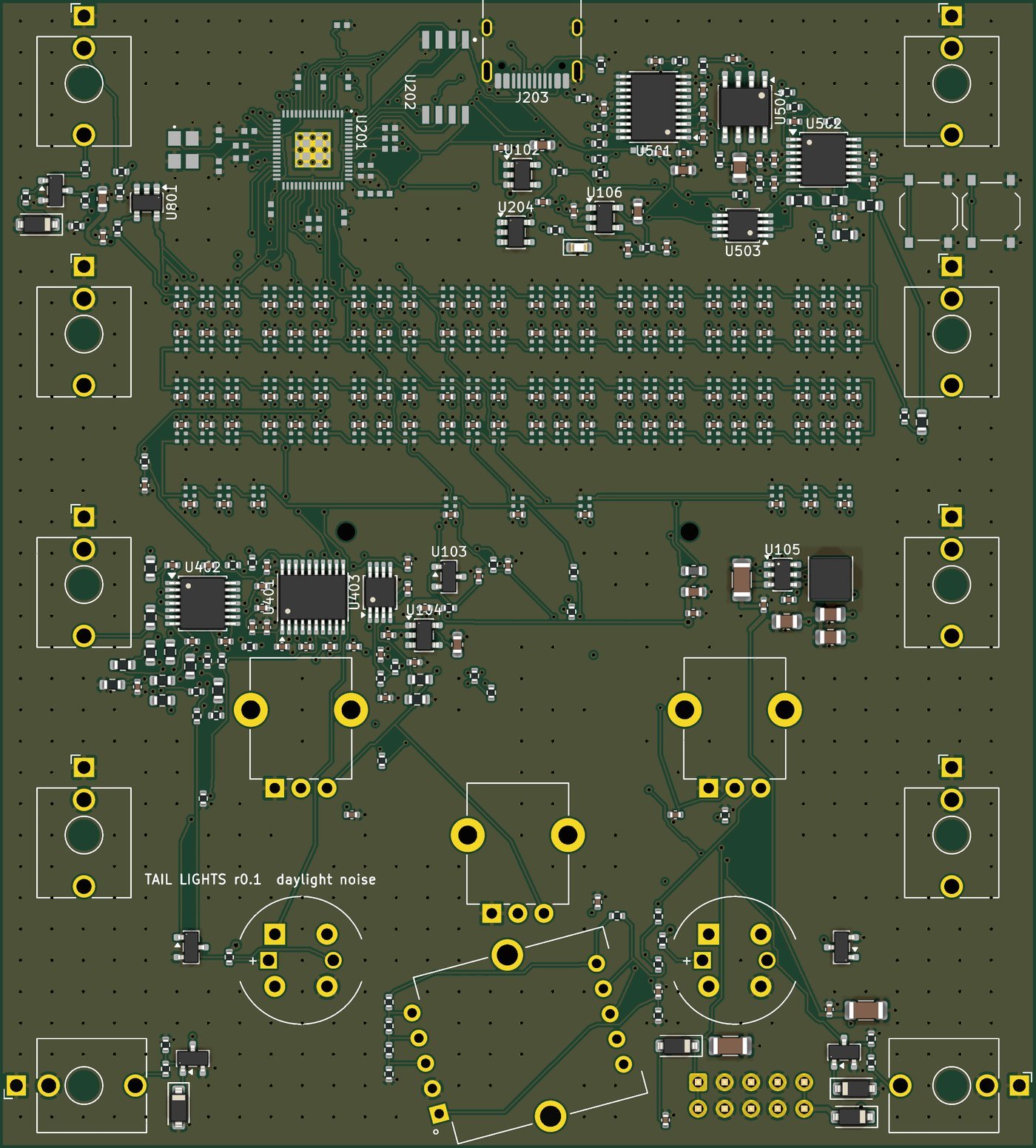
Drag it or use the arrow keys to turn it; click it to take it apart.