12 HP · effect
Reverb that arrives before the note. SYCAMORE cuts what you play into windows, turns each one round, runs it through a room whose echoes fall in pitch, and turns it back, so every note swells in out of its own reverb. It's the old studio trick of reversing the tape to record the reverb, done live to whatever you patch in. FLIP leaves the windows backwards, and LEARN records a take of up to 16 seconds and plays it back to front.
Turn a knob: drag it, roll the wheel over it or use the arrow keys; a double click puts it back. Press FLIP to turn the windows round, and LEARN to keep a take (press again to play it back to front, and again to stop).
example patches
The module's own engine, ported from its firmware and checked against it sample for sample, running in your browser. LEARN and FLIP light as the engine lights them.
IN goes into memory as it arrives, cut into windows of WINDOW's length that overlap by a few milliseconds, so the joins don't click. When a window has all arrived, the engine reads it backwards through the room, eight feedback delay lines, then lets the room run on with nothing in for as long again, so the tail fades out. It works four times faster than real time, so each window is ready before it's due.
The result plays backwards: the tail first, swelling up out of silence, then the window, the right way round again. With FLIP lit the second turn is left out, and each window plays backwards with an ordinary tail after it. With windows a syllable long, a voice comes out in order with every syllable backwards.
A swell before a note has to know the note is coming, so the note waits. Each window comes out about two and a half windows after it went in: 0.6 s with a quarter-second window, six seconds with the longest. MIX blends in the dry signal, which isn't late at all.
The picture on the stage draws this from the engine as it runs: IN above, OUT below.
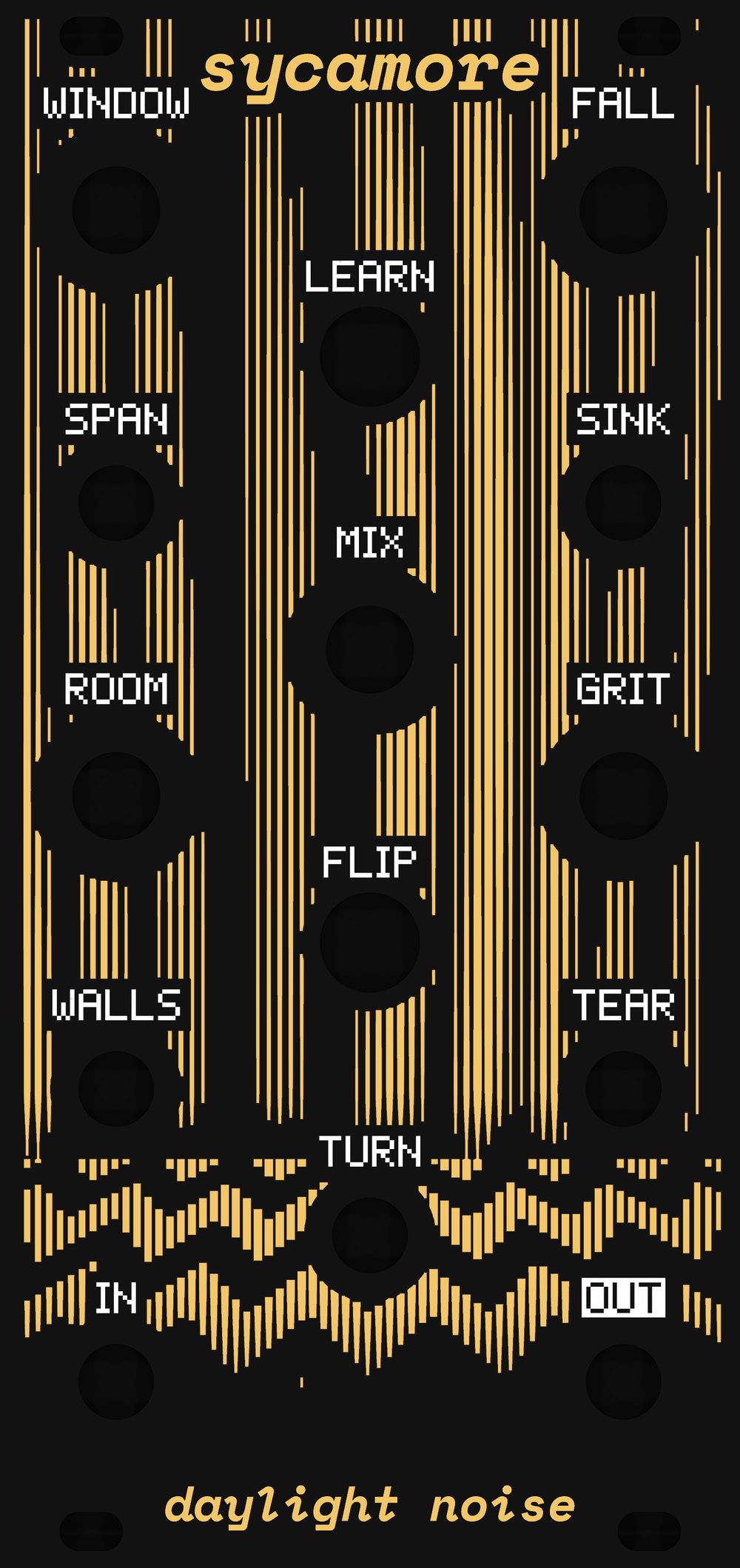
Each CV jack sits right under the knob it adds to, ±5 V across the knob's whole travel.
The art is heavy curtains hanging in folds over a zigzag floor, drawn as vertical gold lines 0.9 mm apart: wide on a lit fold, a hairline in a valley, nothing in the dark. The gold is ENIG-finished copper through the black solder mask, no line thinner than 0.2 mm or closer than that to the next, so a board house can make it as drawn. Every part sits on GIF GIF GIF's staggered grid, 20.8 by 24 mm: three columns and fourteen places in 12 HP, all used.
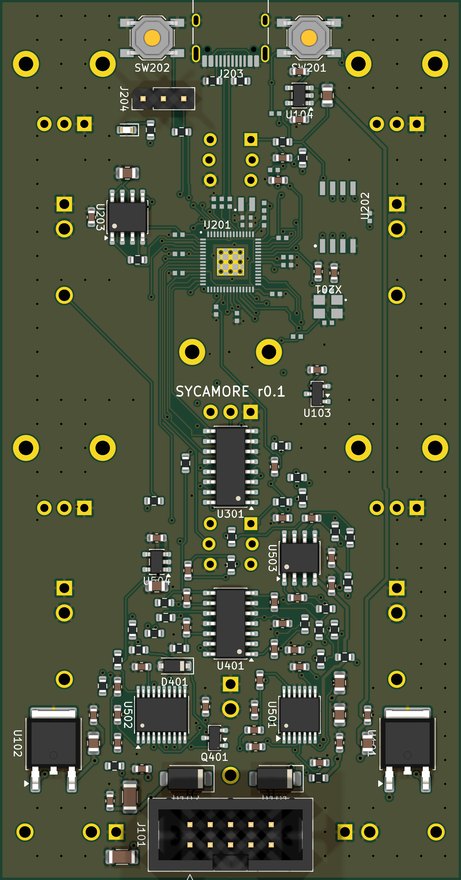
The main board is drawn and routed: four layers, the parts on the back, and the jacks, pots and buttons on the front, behind their holes.
The engine is portable C. The build checks this page's port of it against the C: twelve seconds of knob turns, FLIPs and LEARNs, over half a million samples, identical to the bit.
Drag to look around. Lift the panel, or turn it round for the board's back. Built from the panel's own files and KiCad's renders of the board.
SYCAMORE's board is drawn and routed, its firmware builds and its engine runs. Nothing has been made or played on hardware yet.