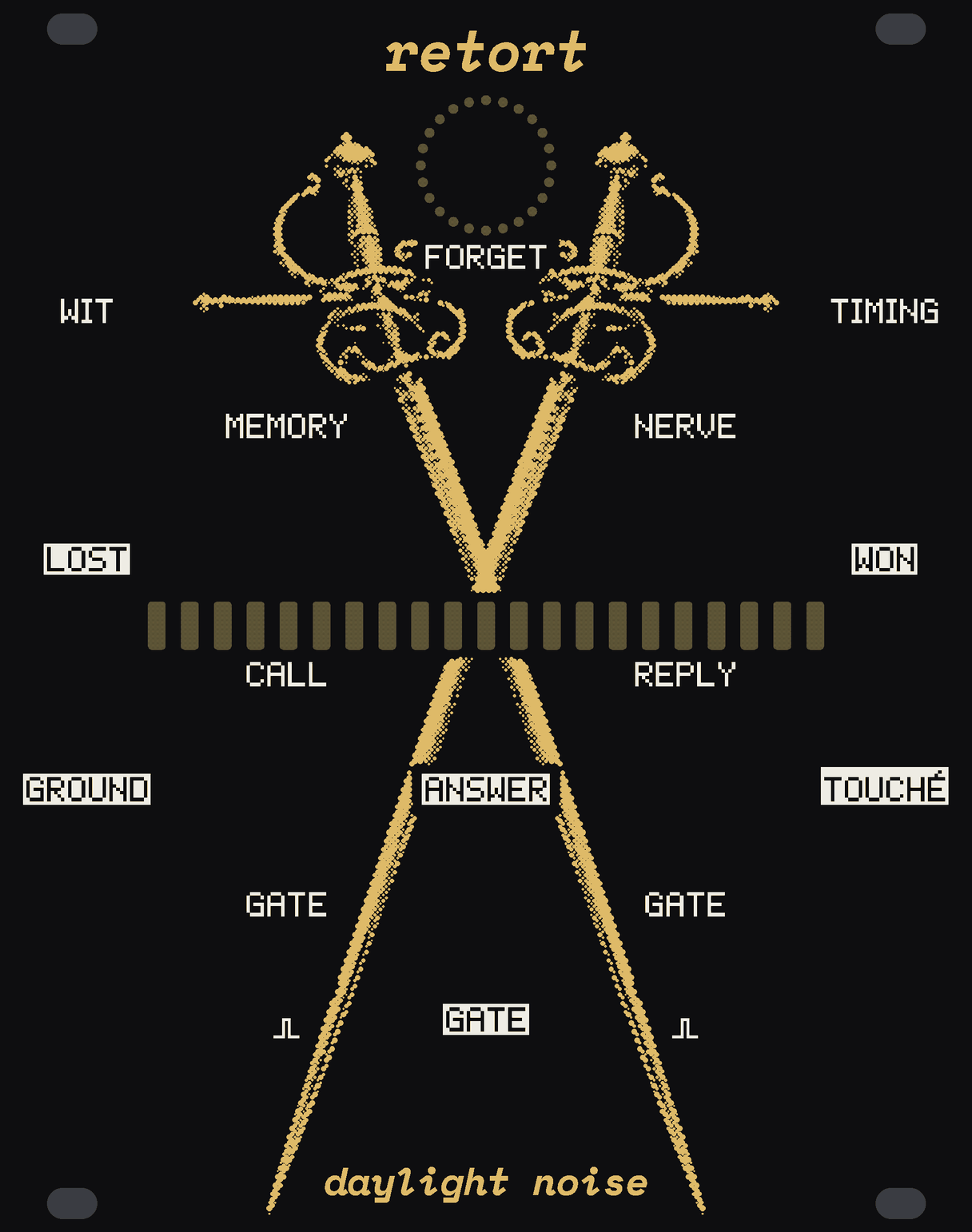
20 HP · call and response
Two parts of your patch argue until one wins. A call comes in, an answer comes back, and RETORT judges it against its book of calls and their right answers, each known by its shape. With nobody to answer, it answers for itself: badly at first, and well once it has heard your set.
Turn a knob: drag it, roll the wheel over it or use the arrow keys; a double click puts it back. FORGET is a button: tap it to tear out the newest pair, hold it two seconds to wipe the book. The patches step on by themselves until you touch anything.
example patches
The hearing, the book, the answers and every out here are RETORT's engine as it's designed, running in your browser. The two sequencers, the voices, the bass and the drums are a stand-in for the rest of a rack.
A call is a phrase: the notes on CALL's gate up to a rest, eight at most. RETORT knows a call by its shape, the steps between its notes and its rhythm, so the same call higher, lower or quicker is the same call.
Patch REPLY and that part of your patch answers, and RETORT judges it. Leave REPLY empty and RETORT answers for itself: the book's answer if it knows the call, and if it doesn't, a shrug, always the same three notes. The answer it should have given comes to it on the way home, and goes in the book for next time.
Each pair in the book is a pip in the ring round FORGET. A call heard a fourth higher gets its answer a fourth higher; a third quicker, a third quicker; a note changed, that note of the answer changed.
The boards across the panel are the duel. The white marker swings toward WON as the answerer gains and toward LOST as the caller does, the side that's ahead lit in its colour.