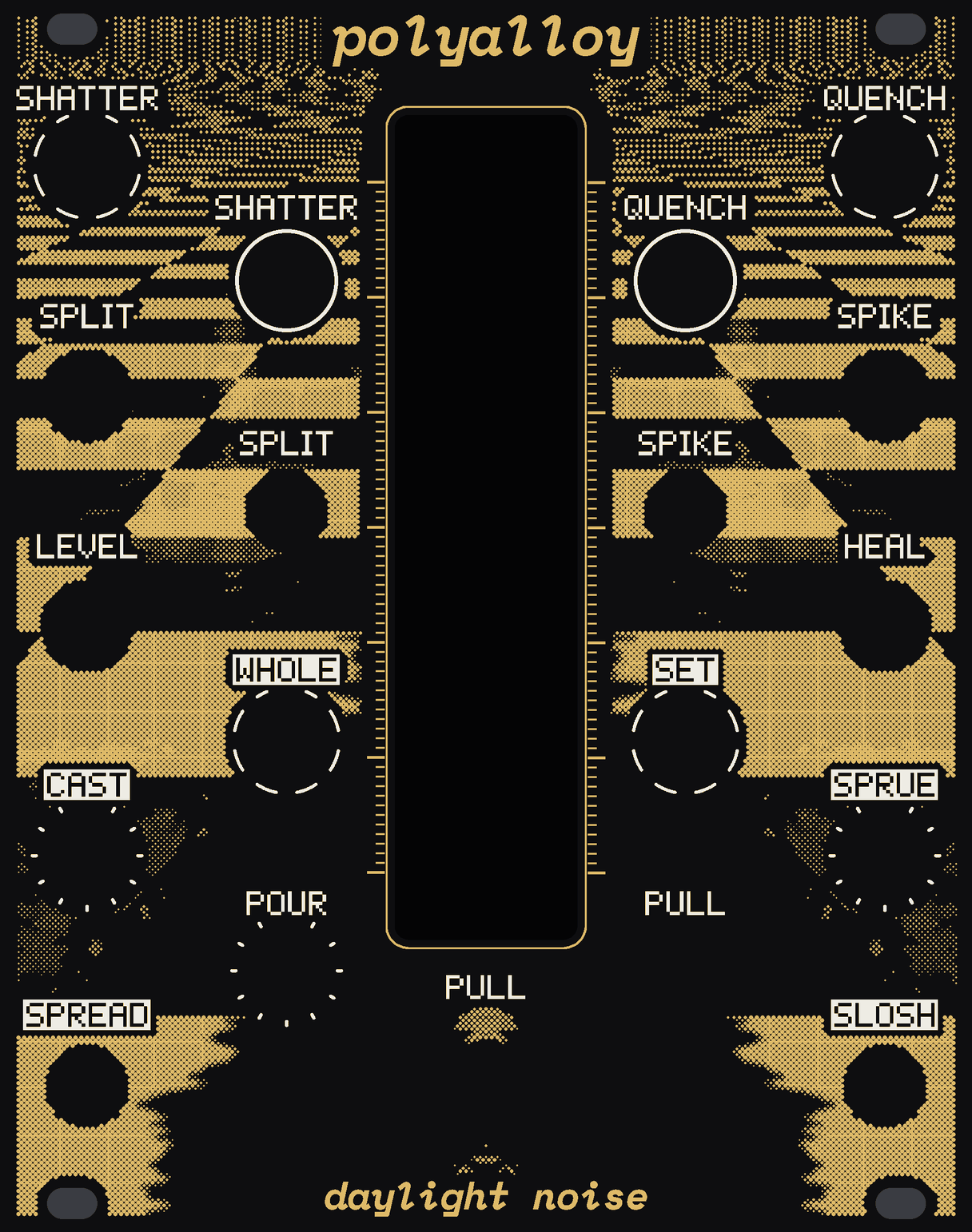
it remembers what shape it was
20 HP
A slew made of a real black liquid, sealed in a glass down the middle of the panel. Your CV draws it up and down with nine coils, beams of light read where it's got to, and that's what comes out: the glide is the liquid crossing the glass. Hit it and it bursts, and your CV with it, and it heals.
The glass: your pointer or a finger is a magnet held to it. The liquid runs to it, stands up in thorns and follows your hand, and CAST goes with it. Let go and it pours back. On a keyboard, tab to it and use the arrow keys. Turn a knob: drag it or tap either side of it, roll the wheel over it or use the arrow keys; a double click puts it back. SHATTER and QUENCH are buttons. The patches step on by themselves until you touch anything.
example patches
Everything POLYALLOY does here is its engine as designed, running in your browser: a model of the liquid, and the firmware that reads it and pulls on it. Your pointer stands in for a magnet in your hand, and the rack round it is a stand-in.
Inside the glass is a ferrofluid: a black liquid that's magnetic. Nine coils behind the glass pull it wherever POUR asks, a millimetre to the semitone, and sixteen beams of light read where it's got to. Nothing computes the glide: it takes as long as a liquid takes. It goes up slower than it comes down, because it weighs something, and it's slower cold than warm.
Pull it two ways and it stretches, necks and comes apart. One input, two outs. Bring the two halves back and they only join when they touch, which is later than they parted.
SHATTER puts everything the coils have under the liquid and it comes apart, repelling itself, up and down the glass. CAST and SPRUE go to wherever the biggest pieces are, which is noise you can see. Then two wells walk in from the ends of the glass and herd the pieces together, and they merge, and the noise closes on the note it was.