the whole pan rings
20 HP
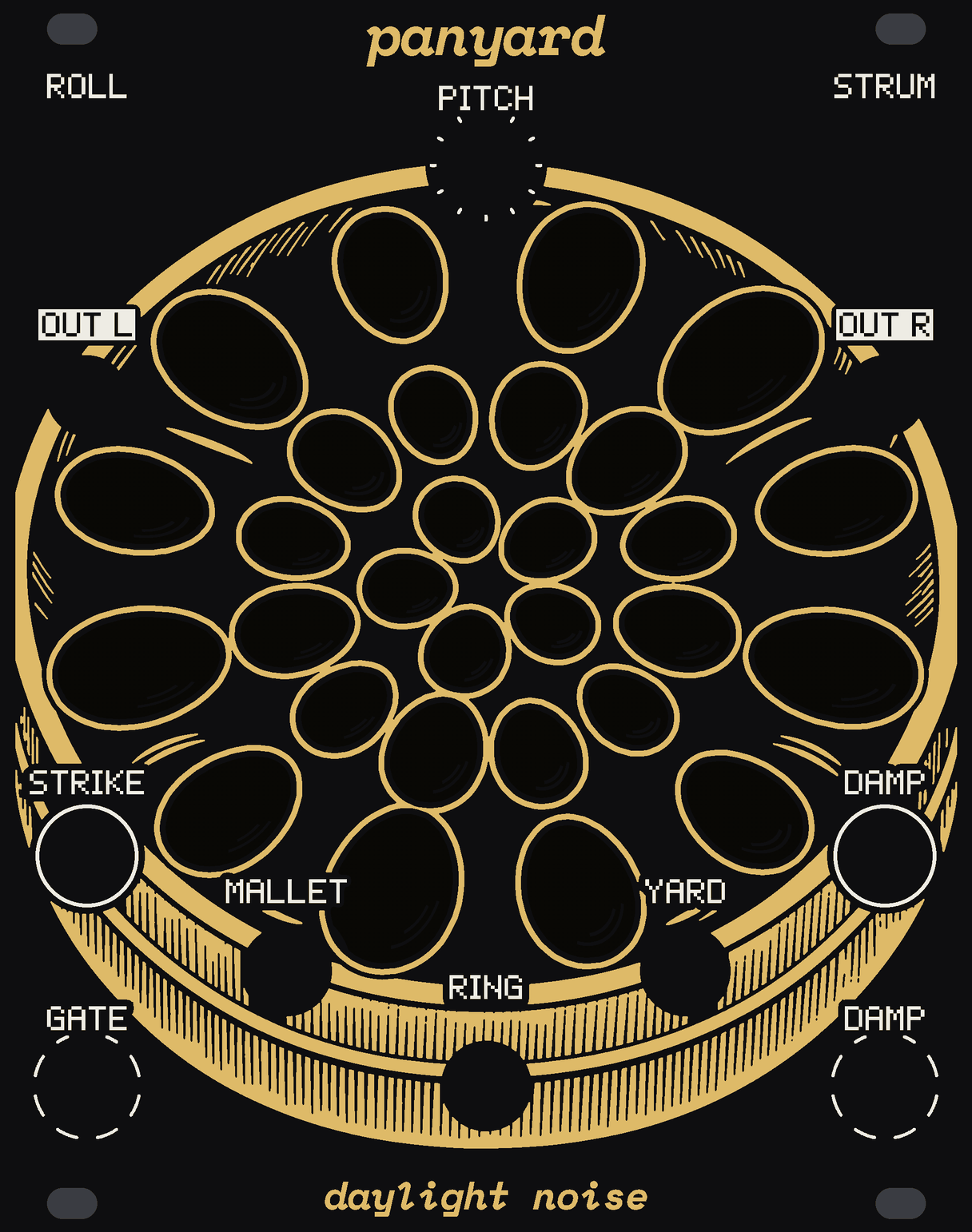
A steelpan you play from your sequencer. Every dent is its own note, and the dents beside it ring along. Hold a note and it rolls; hold it with STRUM up and its chord strums in across the pan.
Turn a knob: drag it or tap either side of it, roll the wheel over it or use the arrow keys; a double click puts it back. Press STRIKE to play the note by hand (hold it to roll), DAMP to put a hand on the pan. The patches step on by themselves until you touch anything.
example patches
Everything PANYARD does here is its engine as designed, in your browser: every dent, the notes ringing along, the rolls, the strums, the stick, the damp, the yard and the light. The drums, the bell, the iron, the bass and the sequencer playing it are a stand-in rack.
A steelpan is a drum whose top has been sunk into a bowl and hammered into note areas, each one tuned. On a tenor pan they go round in rings: the low notes big round the outside, their octaves smaller inside them, a few high notes in the middle. Patch a sequencer into PITCH and GATE and PANYARD plays your notes on its pan, 29 of them, from middle C up two octaves and a bit.
Every note lands on the nearest dent, so even a random voltage comes out as a note of the pan. Each dent rings with its own tuned parts: the note, its octave and the octave and a fifth above, the way a pan tuner tunes them, each a cent or two off true so they beat slowly. Hit it harder and its octave blooms up just after the hit, brighter, the way real steel does. How hard is the gate's height: a 5 V gate is a full hit, a smaller one softer.