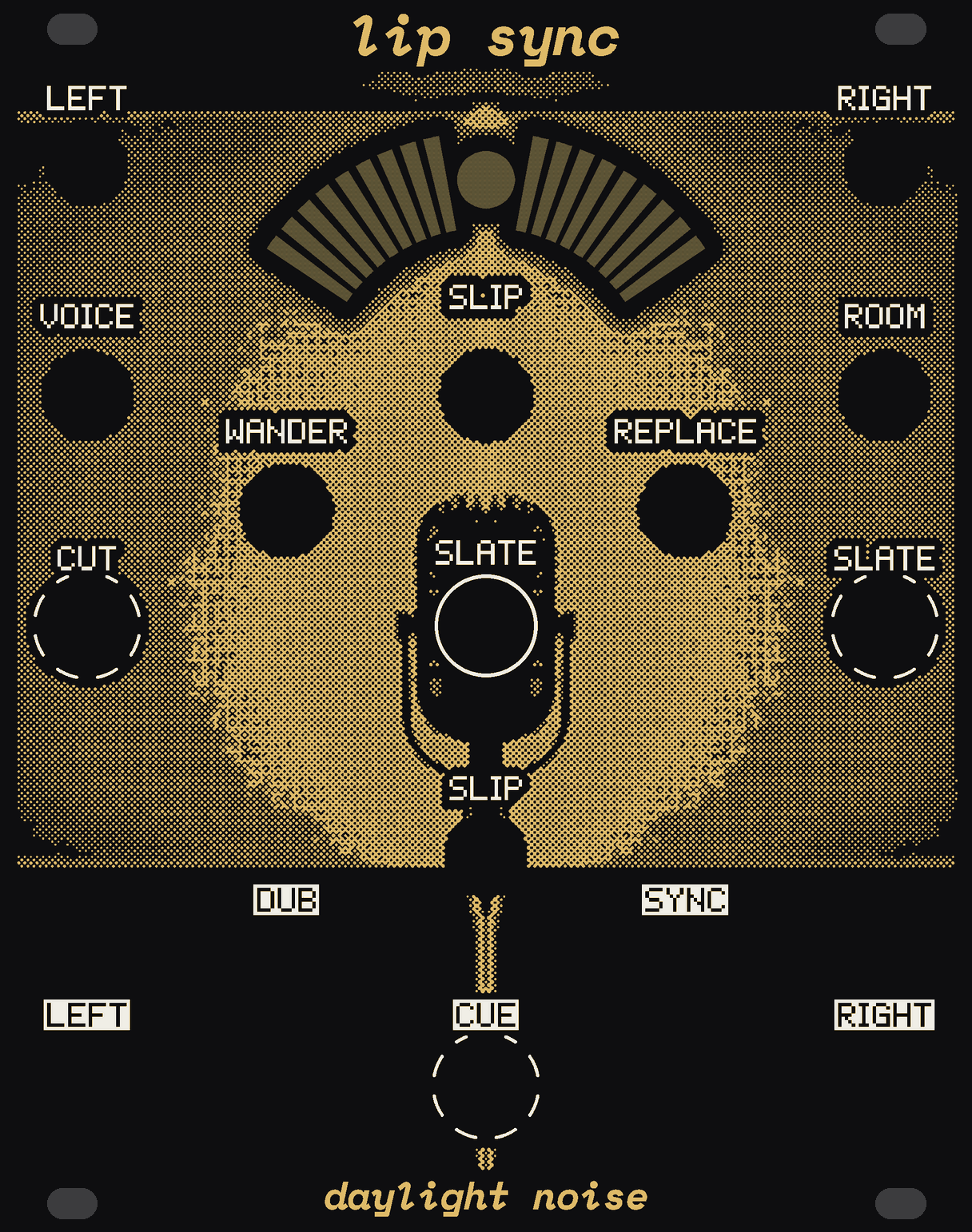
never quite in sync
20 HP
What comes in is the picture. LIP SYNC lays a dub over it: the same sound said again by someone else in another room, and it never quite lines up. Late, early, wandering, in the wrong voice. SLATE claps it dead in sync for a moment.
Turn a knob: drag it or tap either side of it, roll the wheel over it or use the arrow keys; a double click puts it back. SLATE is a button: press it and the dub snaps into sync. The patches step on by themselves until you touch anything.
example patches
Everything LIP SYNC does here is its engine as built, the module's own arithmetic, running in your browser. The song is a stand-in rack.
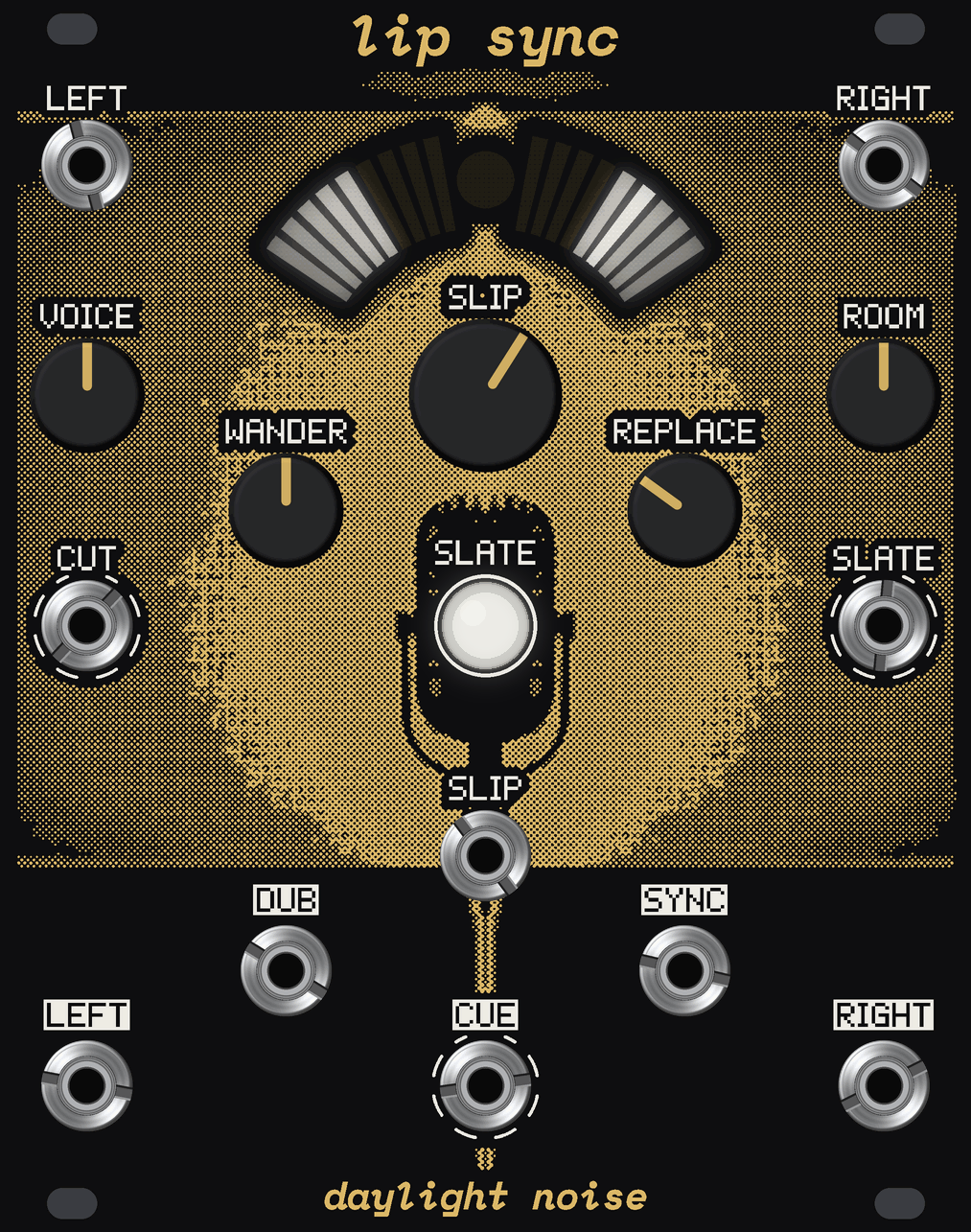
It hears the picture's lines (a phrase after a gap, or every cut on the clock) and cuts each one in where SLIP says.
With SLIP, WANDER and REPLACE fully left and VOICE and ROOM at noon, DUB is the two ins together, exactly.
One board sits 10 mm behind the panel with everything on its front: the jacks, the knobs, SLATE, the meter's 39 white LEDs and the whole circuit, the USB-C in a notch in its left edge. Each window of the meter has its own cell in a black printed baffle, two LEDs under each tick and three under the round one. An RP2350 runs it on both its cores, one making the other actor's voice while the other follows the lines and the slip; the two tapes are in 8 MB of memory beside it.
Drag it or use the arrow keys to turn it; click it to take it apart.