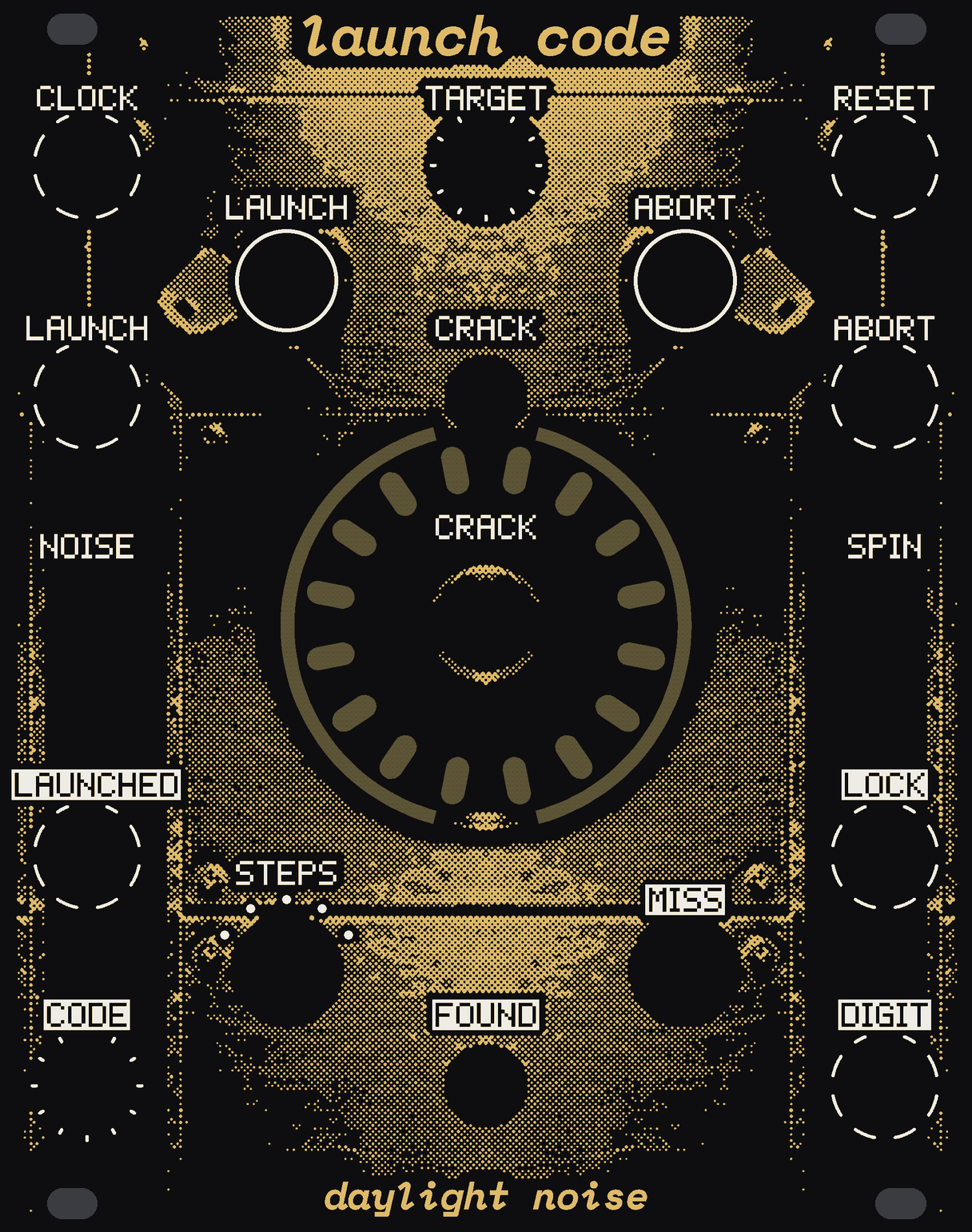
the tune is in the noise
20 HP
Every step starts as a wrong note, a different one each time it plays. One by one, in a random order, the steps lock, and the melody comes out of the noise: yours, from TARGET, or one it makes up. When the last step locks it launches: the drop. Then a new code.
Turn a knob: drag it or tap either side of it, roll the wheel over it or use the arrow keys; a double click puts it back. STEPS clicks from stop to stop the same ways. LAUNCH and ABORT are buttons: press LAUNCH to lock every step now, ABORT to throw them all back into noise. The patches step on by themselves until you touch anything.
example patches
The steps, locks, wrong notes and lights here are LAUNCH CODE's engine, the module's own code, running in your browser; the clock, riff, lead, ping and drums stand in for the rest of a rack.
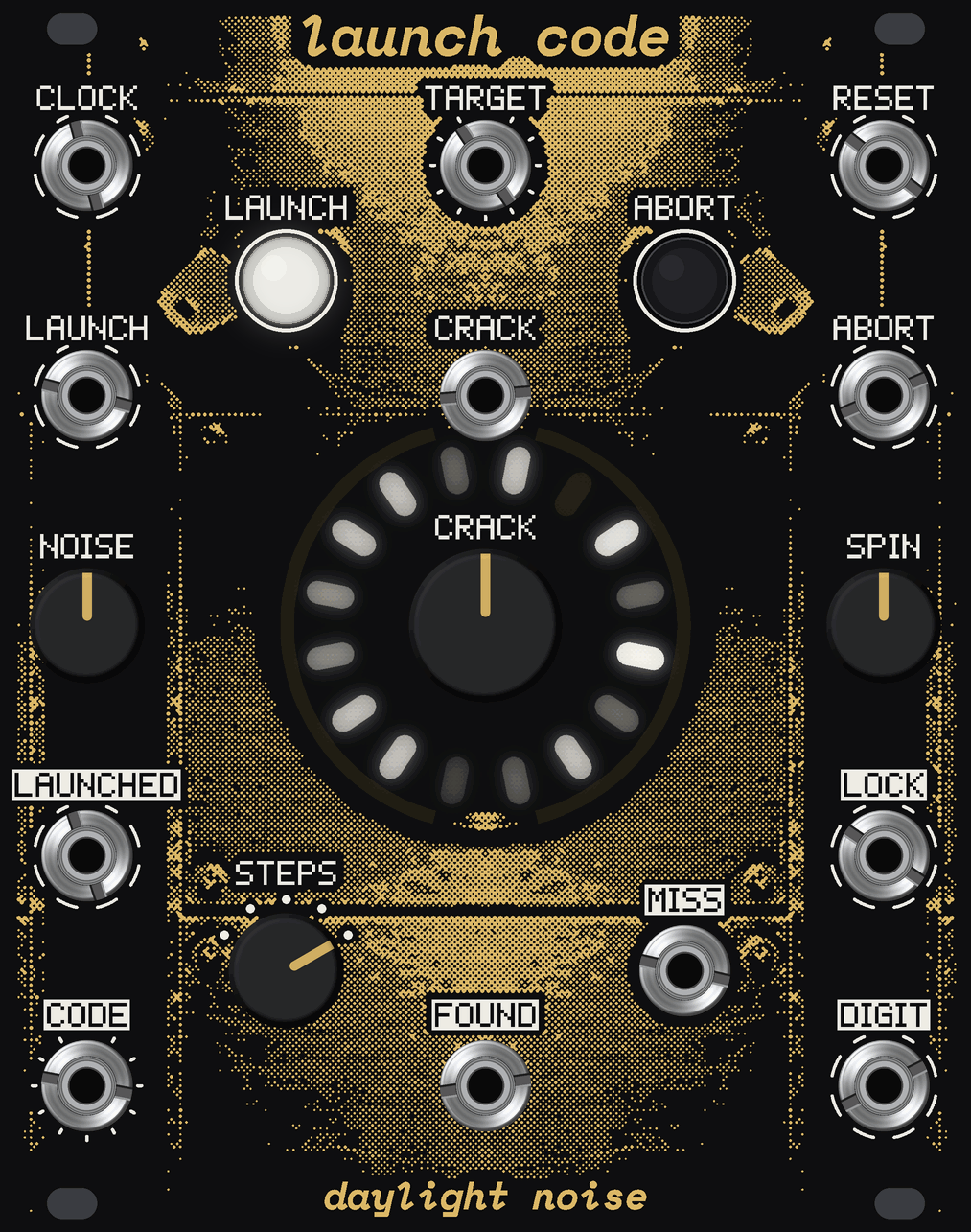
Each clock plays the next step. A found step plays its note; an unfound one plays a wrong note. Every so often a step due in the code's order locks the next time it plays, with a trigger at LOCK.
When the last step locks, the drop comes in at the top of the code: the tune plays clean for as many times round as it took to find, and then a new code begins, every step back to noise.
One board sits 10 mm behind the panel with everything on its front: the jacks, the knobs, STEPS's switch, the two buttons, the 44 LEDs and the whole circuit, the USB-C in a notch in its left edge. Each bolt has its own cell in a black printed baffle, lit by its own two white LEDs, so a step's bolt lights alone, and each arc of the rim its six. An RP2350 plays the code 4,000 times a second.
Drag it or use the arrow keys to turn it; click it to take it apart.