don't put the last one in
20 HP
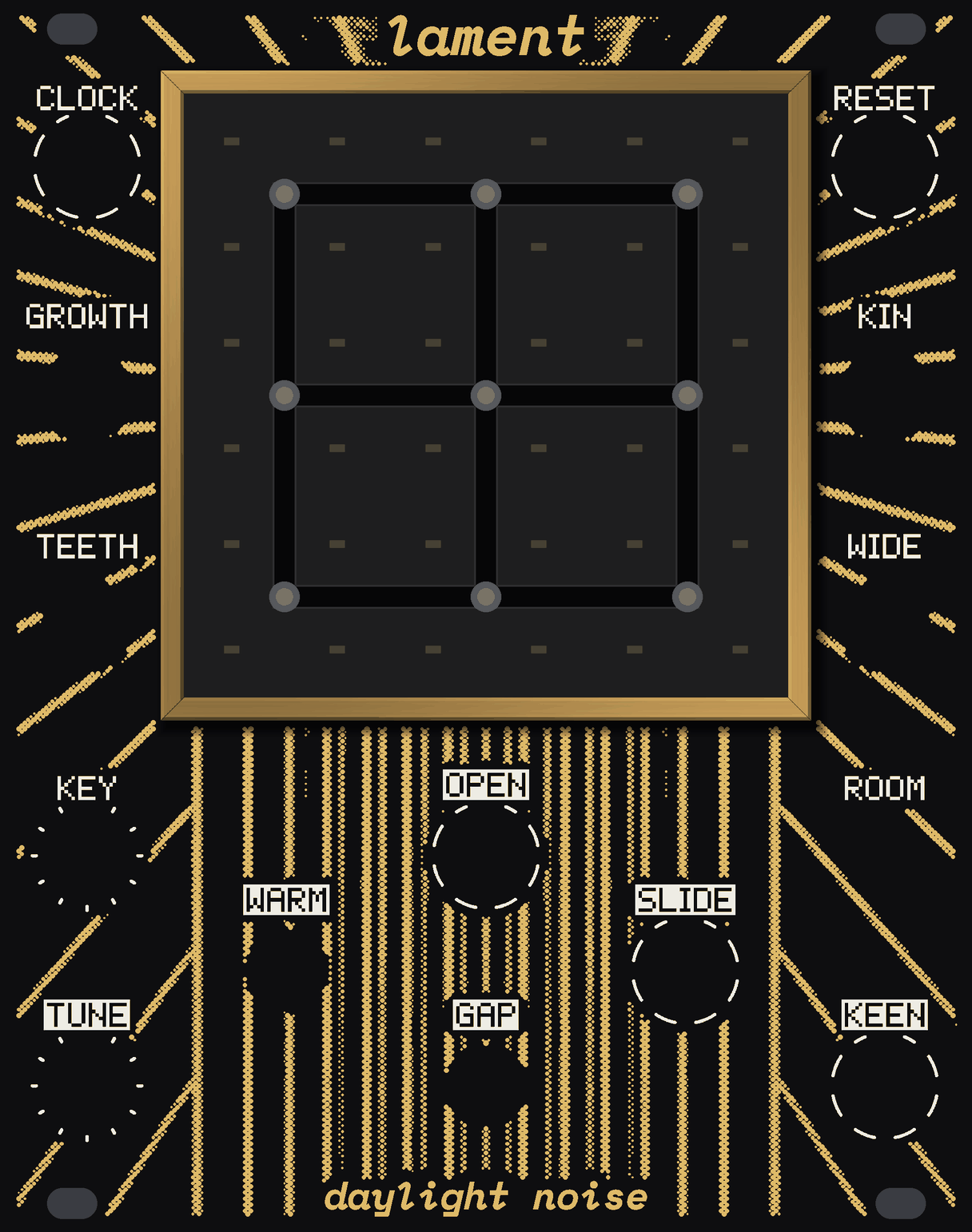
Eight real tiles in a frame, each a fragment of a phrase, one place empty. To move one you move others, so you only get from one tune to the next through the ones between. When the last tile goes in, it opens, and only a slide stops it.
Slide a tile: drag it or tap it, or use the arrow keys. Turn a knob: drag it or tap either side of it, roll the wheel over it or use the arrow keys; a double click puts a knob back. The patches step on by themselves until you touch something.
example patches
Everything LAMENT does here is its engine as designed, running in your browser, the tiles' weight and the sensors under them included. The drums, the pad, the bass and the bell are a stand-in rack.
The board is read clockwise round the frame from the top left, then into the middle, a fragment a tile. The tiles are different lengths, so moving one moves where every note after it lands. The empty place is a rest. Two bars, with nothing else touched.
You can't put a note where you want it. A tile only moves into the gap, so every change drags others with it, and half of all the orders can't be reached at all. Push a tile with another in front of it and they go together.
Home is a real phrase, a bass falling by step with a line wailing over it. Out of order the steps turn to leaps. Nearly home isn't always near: about one board in five has no slide that makes it warmer, and three tiles barely out of place can be eighteen slides away. To get the last ones in you usually break what you've got.
The last tile is a door. As it nears home the rack thins and something starts to come; hold it there if you like. Let it land and every tile goes out, and whatever you sent through ROOM stops. Something comes through the gap on every out, and it's different each time, because it's built from the slides that got you there. There's no way to turn it off. Slide a tile and it stops.