inlé

watch the sea by moonlight

28 HP

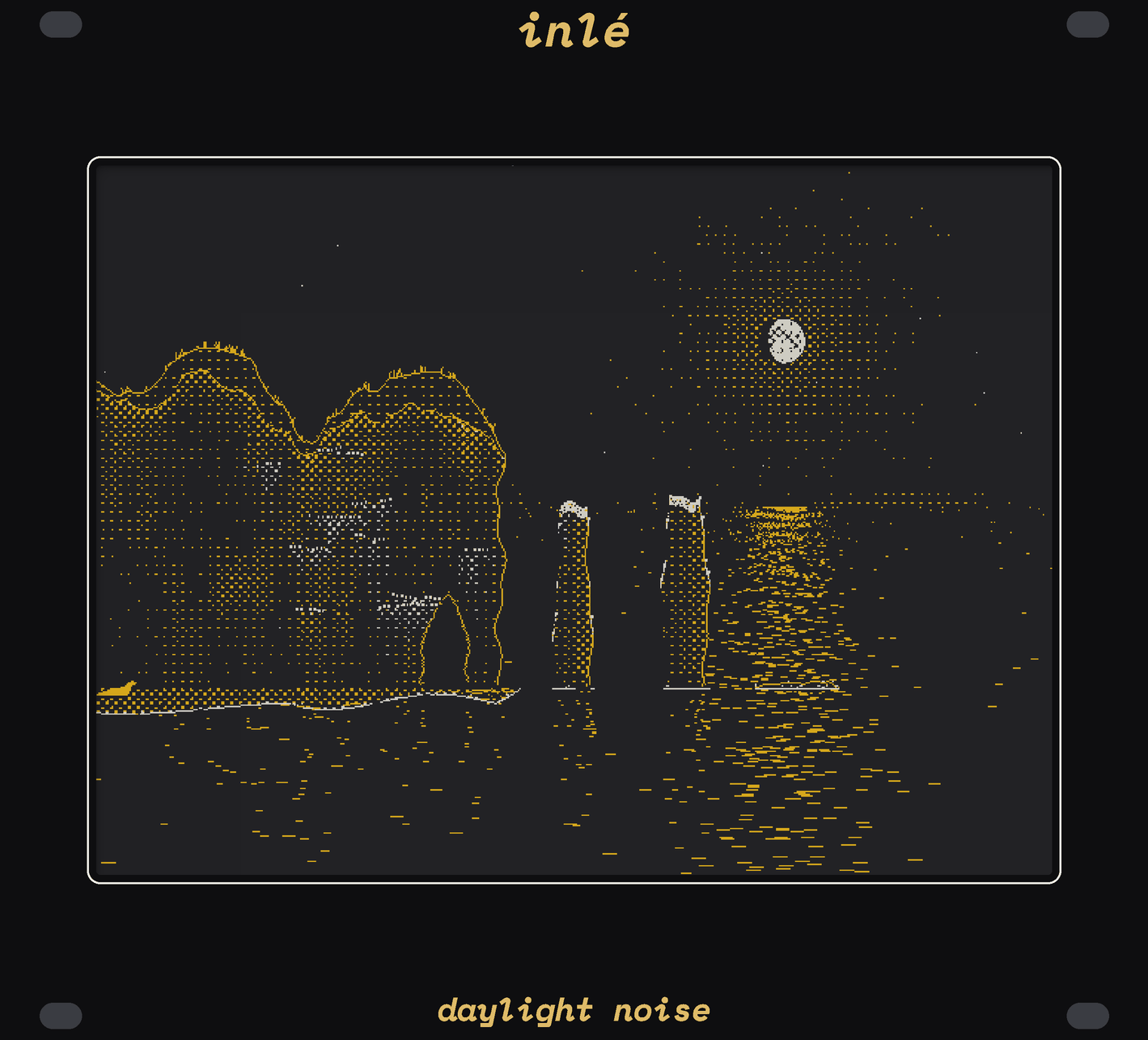
A blank panel with an e-paper window onto a headland by the sea at night. Each time the rack comes on, a month passes there under the moon, drawn in black and yellow and kept with the power off.

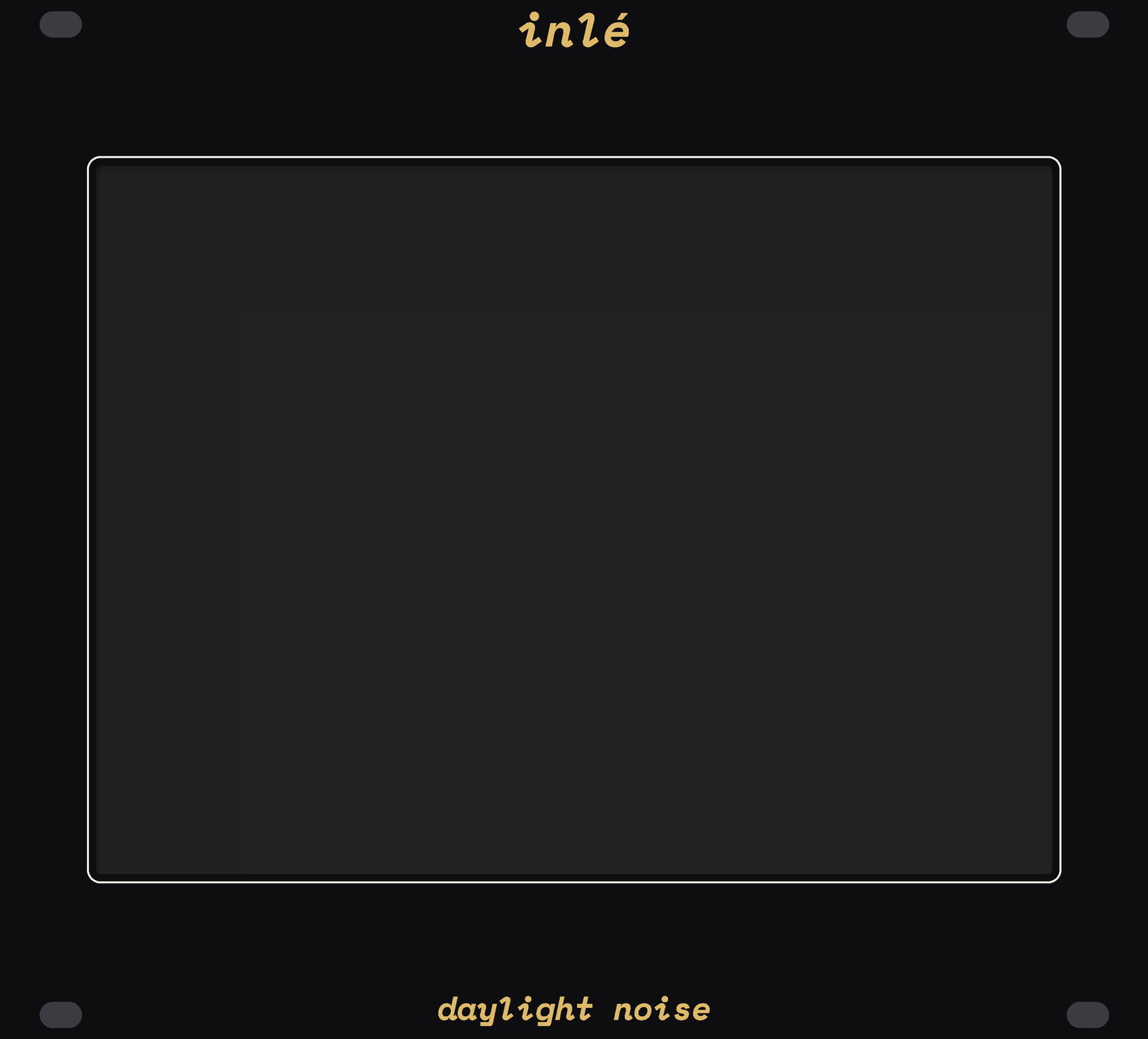
The INLÉ panel: plain black, with a wide window in the middle edged by a thin white line, inlé in gold over it and daylight noise in gold under it. No jacks, no knobs, no lights.

Switch on and a month passes by the sea, drawn over about twenty seconds. Switch off and the picture stays.

The rack's power. On, INLÉ wakes and draws; off, it leaves the picture where it is.

This browser's own INLÉ, its world grown and drawn by the module's own code, dot for dot what the module shows, at the screen's own pace. The module also wants the rack off for three minutes before the next month; the page doesn't.
Waking

Switched on, INLÉ wakes, moves its world on a month and draws it. For about twenty seconds the screen flashes its inks over the last picture, then the new one comes up, and it goes back to sleep until the rack is next switched on.

Keeping

E-paper needs no power to hold a picture. Switched off, INLÉ keeps the last one it drew, for days, so the rack always shows the picture from the last time it was played. Its world is kept with it, and grows on from there.

The world

On a chalk headland over the sea it's always night. The moon waxes and wanes, high or low and in a different place each time, and lays its path across the water. The tide comes and goes over the rocks.

The sea wears the headland away: a cave becomes an arch, the arch falls and leaves a stack standing off the point, and the stack wears down while a new cave starts in the cliff. Seabirds crowd the ledges each spring and summer, and move out onto a stack once the sea has cut it off from the clifftop; seals haul out on the beach. Storms, fog and frost come and go, and once in a long while the sky lights up.

Every INLÉ grows its own from the moment it's first switched on. Nothing is repeated, and no two are the same. The page's INLÉ is this browser's own.

Inside

The screen's glass sits behind the window in a printed black frame, pressed against a thin foam ring so its picture lands exactly on the window, with ribs behind it so a press can't push it in. Its ribbon folds back round the glass's bottom edge, under it, into a connector on the board 4 mm behind the panel. The board is screwed to four spacers soldered to the panel's back, one at each corner. Under the glass, an RP2350 moves the world on a month, draws it and sends it to the glass, then sleeps.

The INLÉ panel with its world on the screen, in black and yellow.

Drag it or use the arrow keys to turn it; click it to take it apart.

Specs

Format

Width
28 HP
Behind the panel
15.2 mm, to the top of the power header
Power
+12 V only; 10-pin header
Controls
none: nothing to patch

The screen

Screen
5.83" e-paper, four inks: black, white, yellow, red
Pixels
648 × 480, on its side
Picture
about 119 × 88 mm
A new picture
about 20 s
No power
keeps its picture

The rest

The world
grown on the module, a month a power-up
A thousand power-ups
about 83 years
Brain
RP2350
USB-C
for updates