hyperspace

20 HP · oscillator

An oscillator that draws. Its X and Y outputs trace a ship among drifting rocks on a scope, the whole scene once a cycle, so the pitch is the frame rate and what you hear is the picture. Every shot that splits a rock changes the tone on the beat.

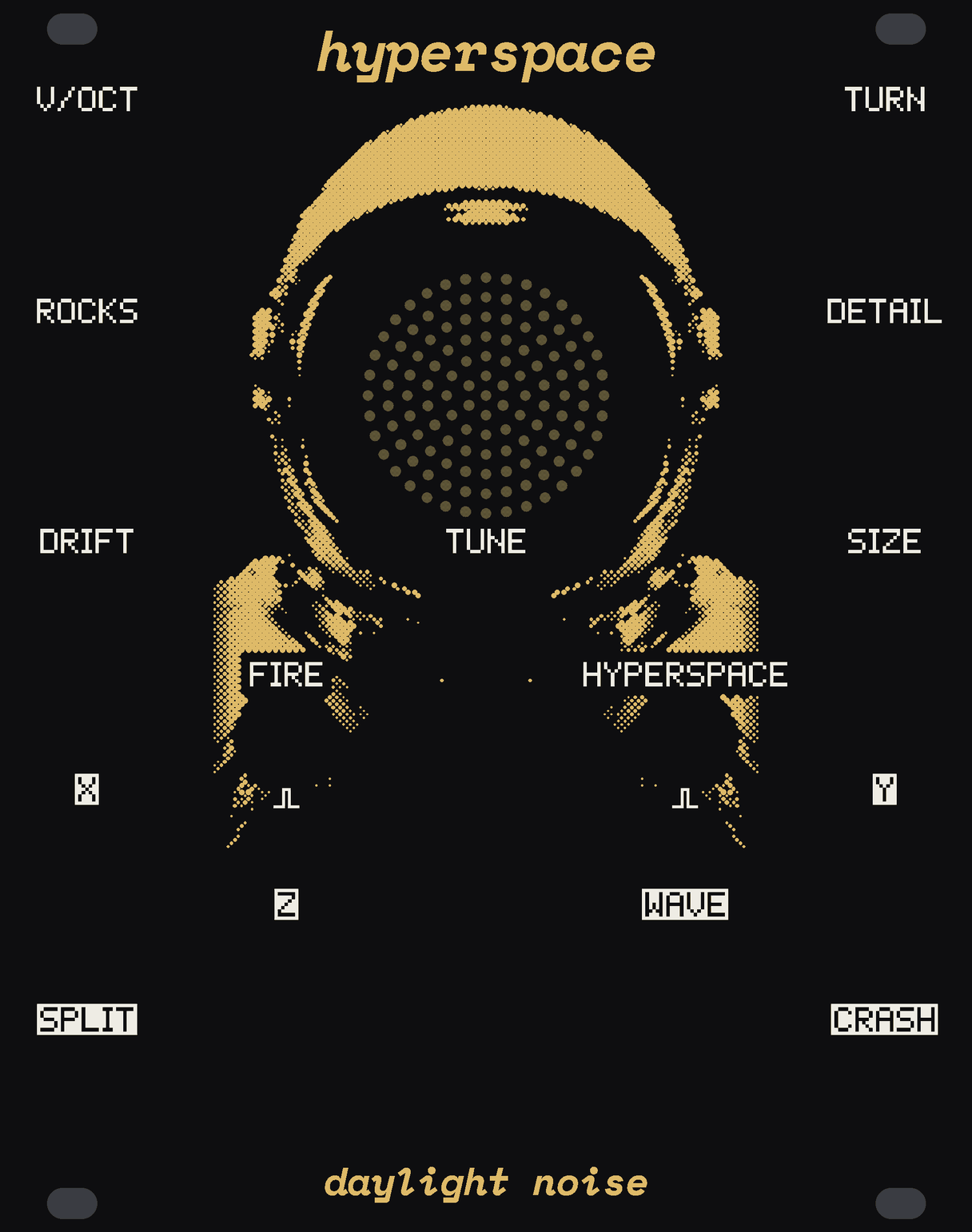
The HYPERSPACE panel: black, with an astronaut's helmet in gold dots, its dark visor full of small round windows of bare circuit board in rings, the radar. The knobs ROCKS and DETAIL beside the visor, DRIFT and SIZE below them, TUNE under the visor and a big round button under TUNE. The inputs V/OCT, TURN, FIRE and HYPERSPACE; the outputs X, Y, Z, WAVE, SPLIT and CRASH. hyperspace at the top, daylight noise at the bottom.

Turn a knob: drag it, roll the wheel over it or use the arrow keys; a double click puts it back. HYPERSPACE is the big button: click or tap it, or press Space or Enter on it. The patches step on by themselves until you touch anything.

The voice is HYPERSPACE's X. The sequencer, the filter, the VCA and the drums round it are made in the page as you listen.

example patches

The picture, the sound, the radar and every out here are HYPERSPACE's engine as it's designed, running in your browser. The sequencer, the filter, the VCA and the drums are a stand-in for the rest of a rack.

The picture

X and Y draw the whole scene once a cycle: from the ship to the nearest rock, round it, on to the next nearest, and home. The time is shared out along the path by length, so every cycle is exactly one frame and the pitch holds whatever the picture does. One round rock is a low, buzzy tone; a field of small jagged ones is bright and busy; the ship blowing up is a burst of noise.

The rocks

Rocks come in from the edges in waves. A shot that hits a big rock splits it in two, a middling one splits into two small ones, and a small one is gone. Clear the field and the next wave comes in.

The ship

The ship sits among the rocks and turns to face the nearest one. If a rock reaches it, it blows apart and a new ship appears a moment later.