nobody bumps
20 HP
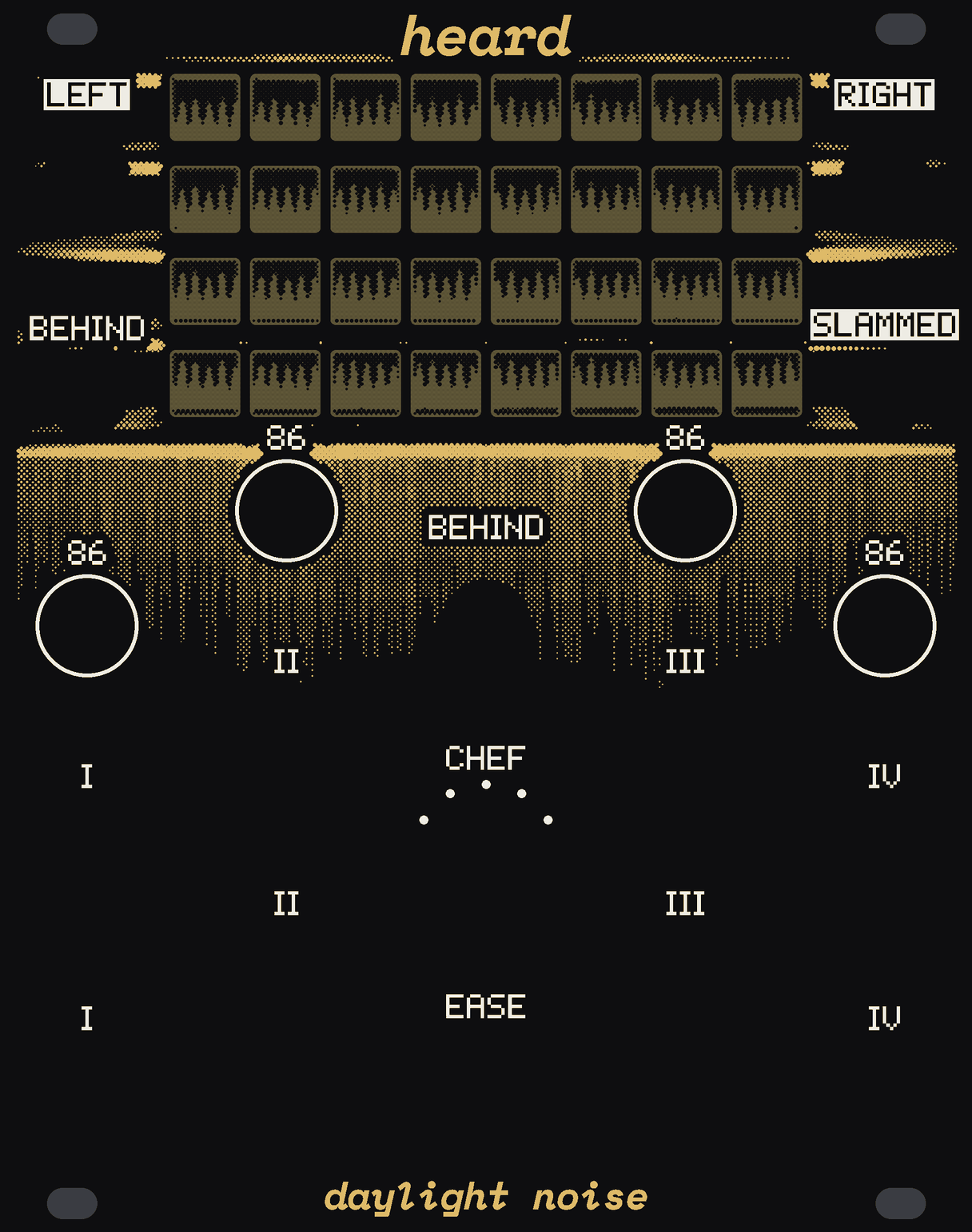
A mixer for four parts that does a mixing engineer's listening for you. Whenever one moves (a hit, a new note), the others step out of its way, only where and only as long as it needs, then step back in: the kick and the bass stop blurring into one thump.
Turn a knob: drag it or tap either side of it, roll the wheel over it or use the arrow keys; a double click puts it back. CHEF is a switch: it clicks from stop to stop the same ways. The 86s are buttons: press one (or Enter) to take its station off the line, again to put it back. The patches step on by themselves until you touch anything.
example patches
Everything HEARD does here is its engine as designed, running in your browser: the listening, the room each part makes, the places along the line, SLAMMED. The loop and the voices are a stand-in rack.
Play a kick and a bass note at the same moment and you don't hear two things: you hear one blurry thump. Your ears can't pull apart two sounds that land in the same part of the sound (the same stretch of pitches, from the deep lows up to the hiss at the top) at the same time. The louder hides the quieter. That's called masking, and it's why four good sounds summed at the same level go muddy as soon as the patch gets busy: everything you made is still there, just hidden.
A mixing engineer fixes it by carving: a small dip in one part's tone right where another part lives, the bass turned down for a tenth of a second each time the kick lands. It works, but it means knowing where every part sits and when each one matters, and a lot of careful knob turning. HEARD does that listening for you, all the time.
On a busy restaurant line the cooks don't stop for each other: whoever's moving calls "behind!" and the others shift aside, just enough and just then, and nobody bumps. HEARD's four stations work the same way.