it's bigger on the inside
20 HP
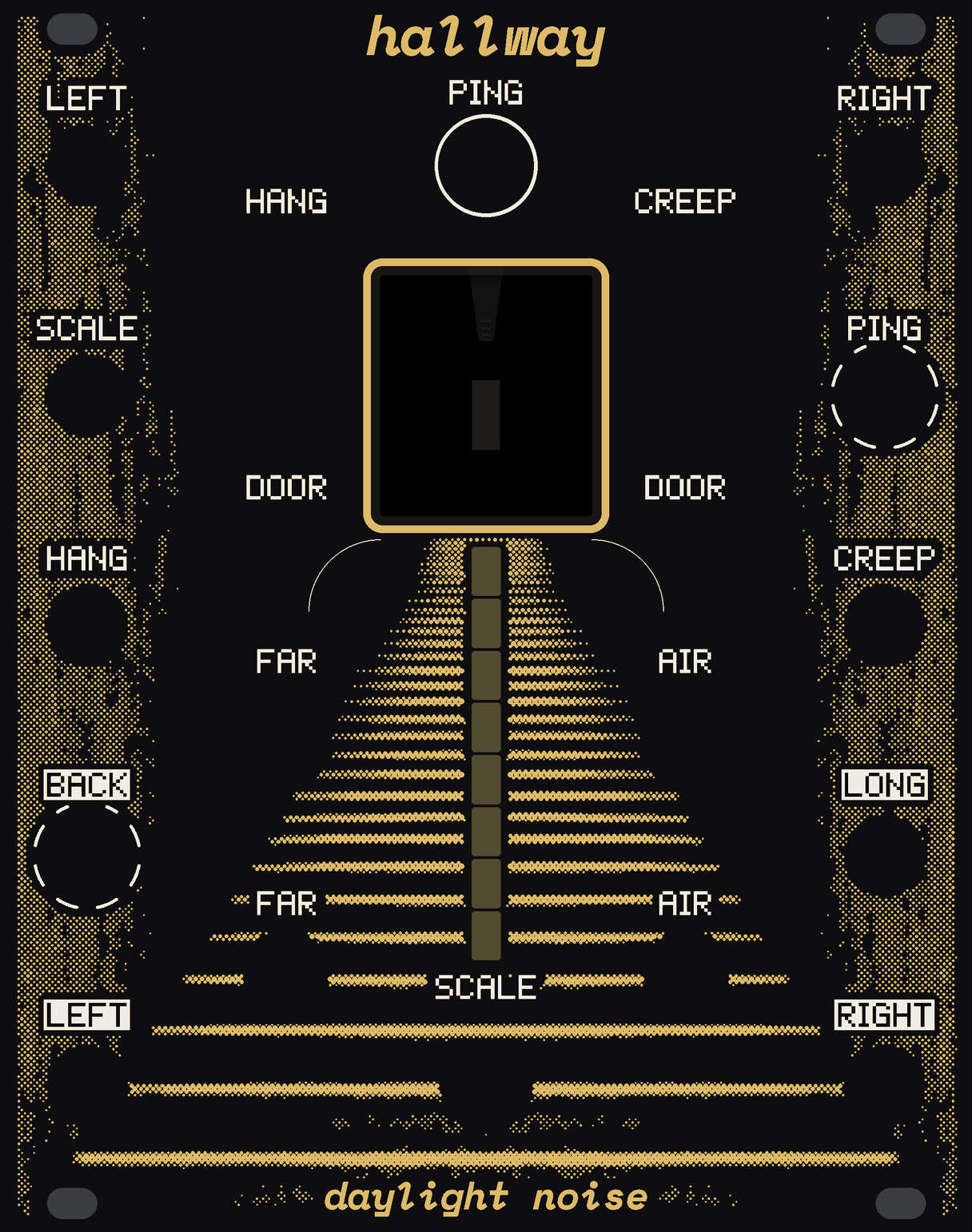
A reverb made from a real room. Behind the window is a small corridor with a wall that slides and two doors that open. It chirps the room eight times a second, hears what comes back, and that is the reverb. Then SCALE takes the same room past anything that could fit in the house.
Turn a knob: drag it or tap either side of it, roll the wheel over it or use the arrow keys; a double click puts it back. The brass puck is the end wall: drag it along the strip. Each brass lever is a door: drag it round. PING is a button. The patches step on by themselves until you touch something.
example patches
Everything HALLWAY does here is its engine as designed, running in your browser. On the module the room is a real one; here it's a model of the air in it, and the engine knows only what that hands back. The loop is a stand-in rack.
It's real. A corridor 22 mm wide and up to 53 mm long, with the panel for a ceiling. A speaker and two microphones look down it, and eight times a second it sends a chirp too quiet to hear and listens to what comes back. The wall and the doors aren't wired to anything. It finds out where they are by listening.
Architects test halls this way: build a small one, play sound through it fast, slow down what comes back. At 1:8 that's all it does. Past that the measurement's run out of top end, so the top keeps its pitch and only the time stretches: when each echo lands, and how fast each band dies. The hall grows longer and lower and stays as dark.