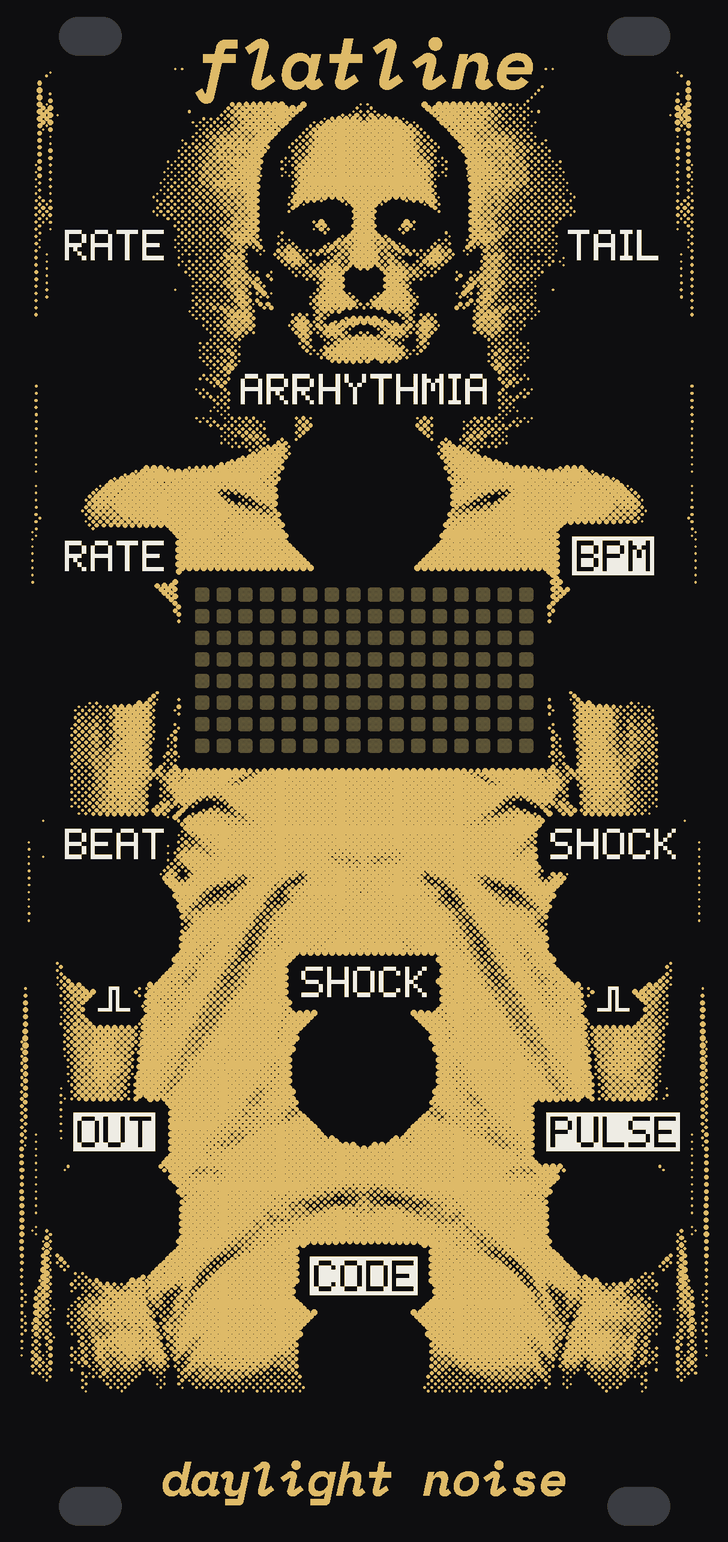
12 HP · envelope
An envelope with a heartbeat. Every gate is one beat of a heart trace: the hit, the tail, and a small swell just before the next beat is due. Stop the beats and it flatlines; SHOCK brings it back, and something comes back with it.
Turn a knob: drag it, roll the wheel over it or use the arrow keys; a double click puts it back. SHOCK is a button to press. The patches step on by themselves until you touch anything.
example patches
The heart, the monitor and every out here are FLATLINE's engine as it's designed, running in your browser. The drums, the voices, the shocks on the drop, the CV into RATE and the hand on RATE are a stand-in for the rest of a rack.
Every gate is a beat in three parts. The hit is a sharp spike with a small dip under the line after it. The tail is a broad second swell. The bump before is a small swell placed just ahead of the next beat, timed from the gates, so it swells into the next hit; if that beat never comes, the bump was for nothing. The faster the beats come, the shorter the tail: it goes with the square root of the time between them, so it keeps up with the tempo and never smears.
Miss three beats and the trace runs flat: OUT sits at 0 V, CODE goes high, the monitor turns red and SHOCK glows. SHOCK is the paddles. The first beat back overshoots, bigger and sharper than the rest, and something comes back with it: every beat carries a ghost beat, louder the longer it was under, fading over about as many beats as it was gone. Gone long enough, two follow every beat.
Shocking a heart that's still beating is a gamble. Between beats it's an extra jolt of a beat. On the tail it throws the heart into fibrillation: OUT shivers in a fast, chaotic wobble, PULSE fires at random, and a few seconds later it goes flat unless it's shocked again.