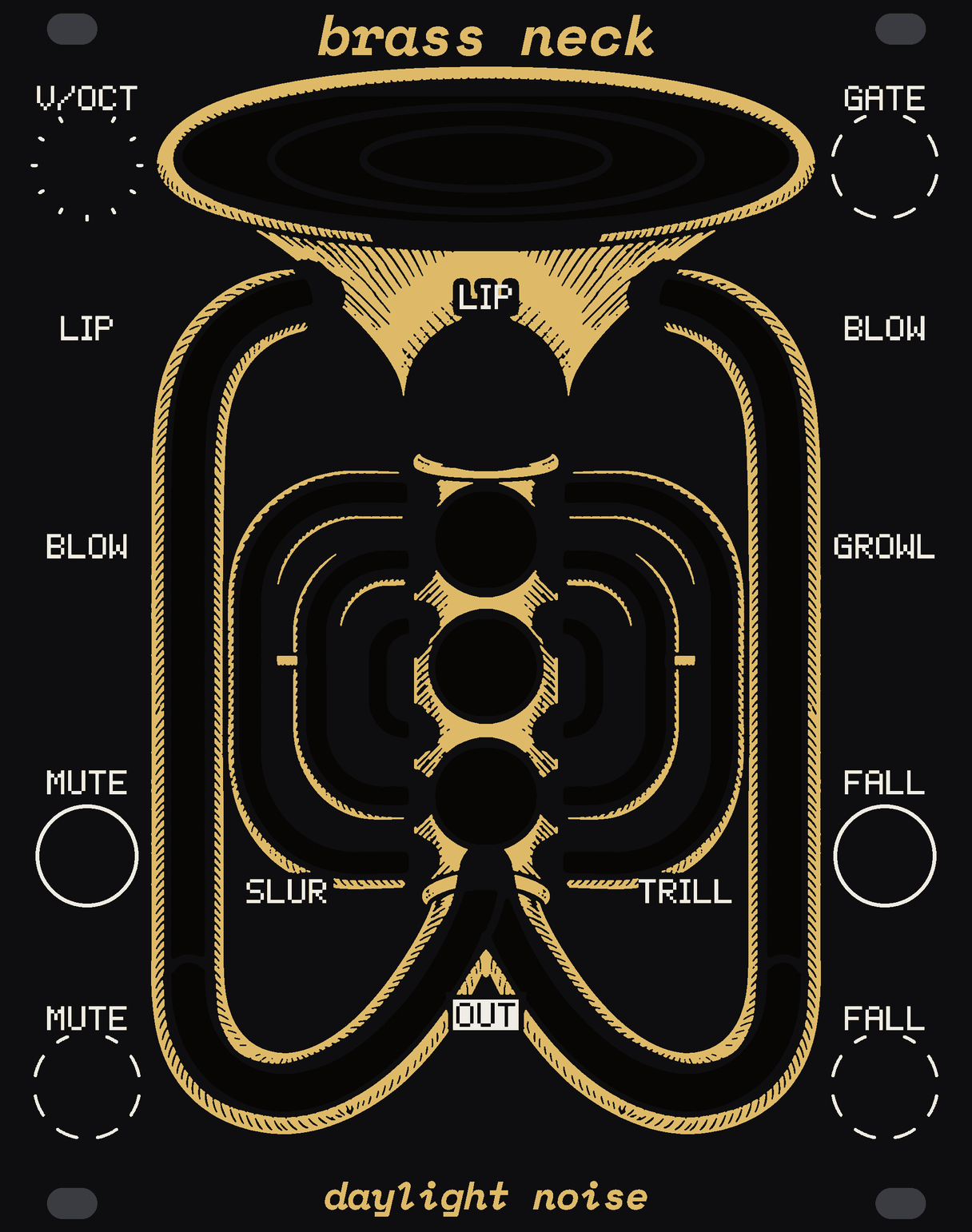
a horn, valves and all
20 HP
A brass horn you play from V/OCT. For every note it picks the valves and the harmonic a player would, slurs on its lips when it can and clicks the valves when it can't. Push LIP and the high notes crack, as a real horn's do.
Turn a knob: drag it or tap either side of it, roll the wheel over it or use the arrow keys; a double click puts it back. Turn LIP up and watch the high notes crack; press MUTE or FALL. The patches step on by themselves until you touch anything.
example patches
Everything BRASS NECK does here is its engine as designed, in your browser: the player's choice of valves, the lips and their cracks, the slurs, the mute, the falls and the light. The drums, the tambourine, the trombones and the sequencers playing it are a stand-in rack.
A brass horn is a long tube with a mouthpiece at one end and a bell at the other. A tube that long can only sound certain notes, its harmonics: low ones far apart, high ones crowded close together. The player's lips buzz in the mouthpiece and lock onto one of them.
The valves fill in the notes between. Each one, pressed, sends the air round an extra loop of tubing, so the tube is longer and every harmonic a little lower: one valve a tone, one a semitone, one a bit more. A player picks the valves and the harmonic for every note without thinking. BRASS NECK does the same for whatever you send into V/OCT: it plays the nearest note, and picks the fingering a player would.
On the panel the air is the light. At every new note a pulse of it leaves the mouthpiece, LIP, runs down through the valves and round the loops of the ones that are down, climbs the tall tubes at the sides and blooms in the bell. With more valves down it really does take the long way round. The bright spots standing along the tubes are the harmonic the lips are on: a few big ones for a low note, many small ones high up.
MUTE pushes a straight mute into the bell, or pulls it out. The low end drops away and the horn turns thin, nasal and buzzing, the way a muted horn sounds from down the street. On the panel the bell's middle goes dark and its rim a cool silver, and the button stays lit while the mute is in. A gate into the MUTE jack turns it the other way while it's high, so a sequencer can mute a phrase. A real one remembers whether the mute was in when you switch it off.
FALL makes the note that's sounding fall off: the lips let go and it slides down the harmonics, the valves fluttering half pressed, and fades away. Hold it, or hold a gate in its jack, and every note falls off as it ends.