bootstrap

20 HP · effect

A canon that becomes its own cause. What you play comes back changed: shifted, backwards, mirrored or aged. Patch its tail into its mouth and the copy goes round until it settles on the one version of itself that survives the change. Turn a knob then, and it tears.

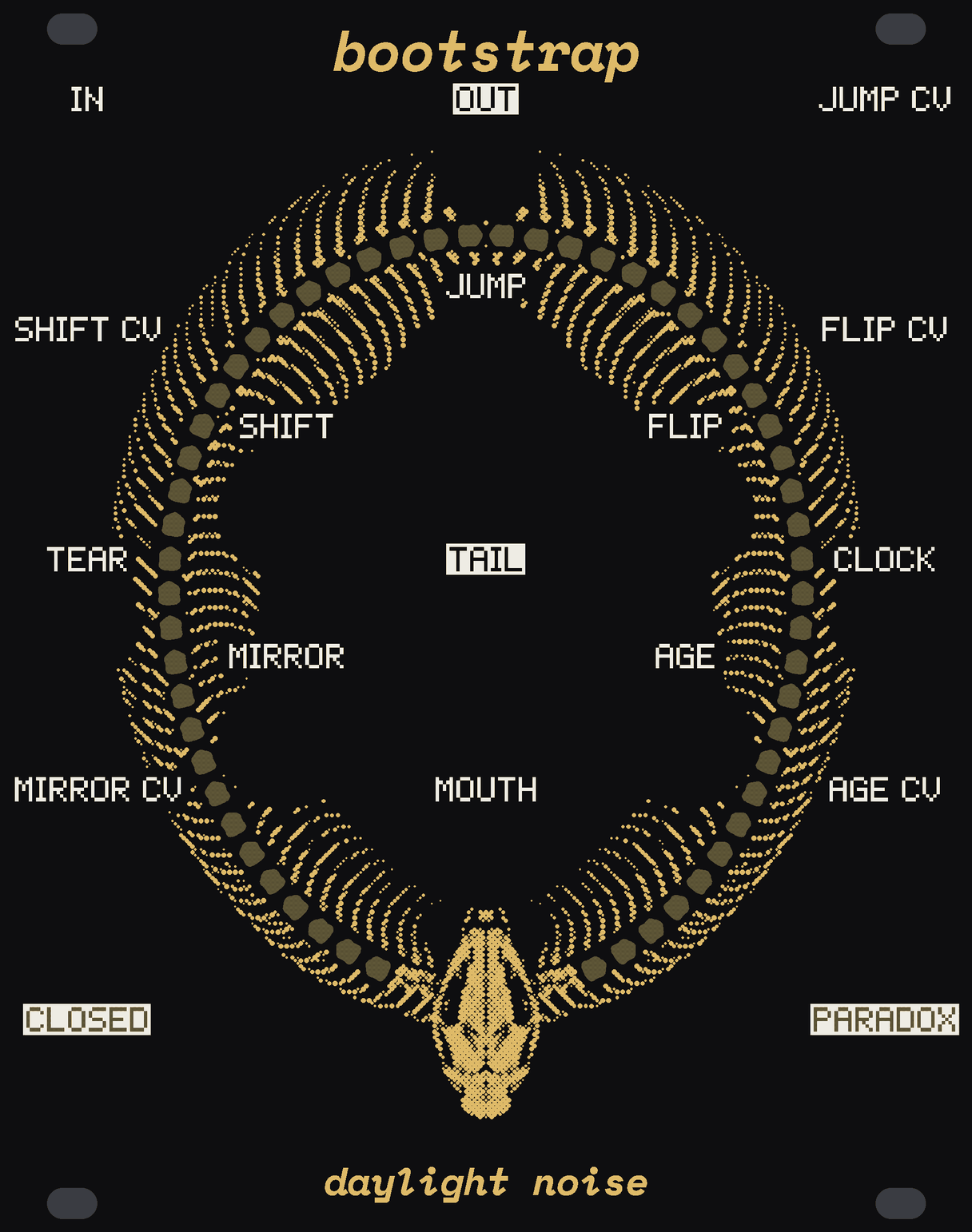
The BOOTSTRAP panel: black, with a snake's skeleton in gold dots coiled in a ring, its skull at the foot biting its own tail, every rib fanned out. Its backbone is 58 little windows of bare circuit board. White labels: IN, SHIFT CV, TEAR, MIRROR CV and CLOSED down the left; JUMP CV, FLIP CV, CLOCK, AGE CV and PARADOX down the right; OUT at the top, JUMP inside the ring under it, SHIFT, FLIP, MIRROR and AGE round TAIL in the middle, MOUTH by the jaws. bootstrap at the top, daylight noise at the bottom.

Turn a knob: drag it, roll the wheel over it or use the arrow keys; a double click puts it back. Turn one while the ring is closed and the loop tears.

The copy and the loop are BOOTSTRAP's own. The bells, the clock and the soft drums round them are made in the page as you listen.

example patches

The canon, the changes, the loop, its lights and its sound here are BOOTSTRAP's engine as it's designed, running in your browser: what comes back, how it's changed, when it has settled and how it tears. Everything round it is a stand-in for the rest of a rack.

The canon

Whatever goes in comes back JUMP later, changed. OUT is your part and the copy together: a round of two, the second voice a little different from the first.

The change

Four ways the copy comes back different, each with its own CV. Any one at full is a different copy on the first trip.

The loop

Patch TAIL into MOUTH, the snake's tail into its own mouth, and the copy goes round again, changed every trip. Your part is let go over the first trips. What doesn't survive the change falls away, and in a few trips the loop settles on what does: each trip the same as the last. Then the ring is closed and the outside is shut out. Anything patched between TAIL and MOUTH goes round too.

The paradox

Once it's closed, the loop is its own cause, so changing it is a paradox. Turn a knob and it tears: its memory breaks into torn, skipping fragments for a moment, your part is let back in, and it settles again on a new one.