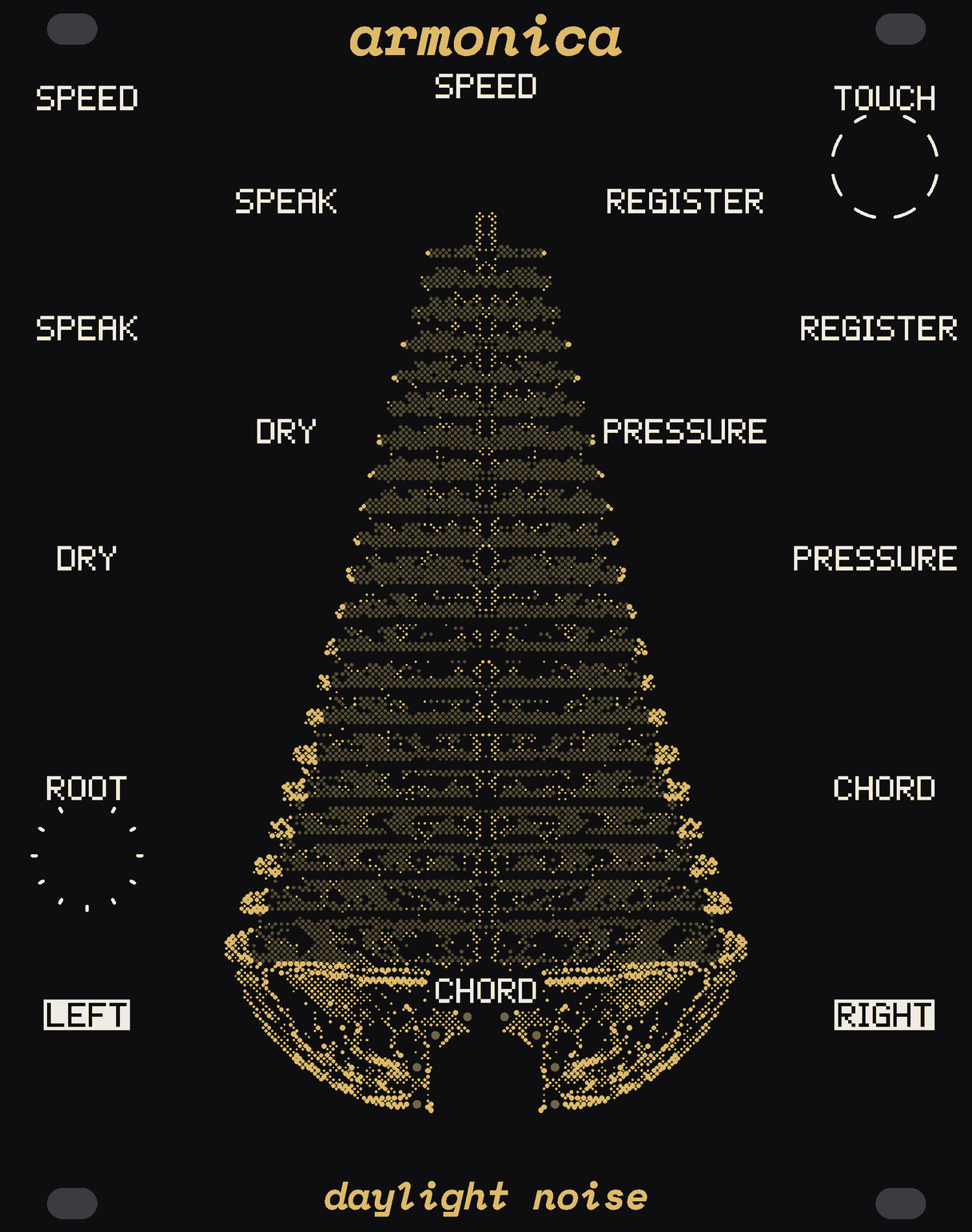
Turn a knob: drag it or tap either side of it, roll the wheel over it or use the arrow keys; a double click puts it back. CHORD is a switch: it clicks from chord to chord the same ways. Rub the glass up the middle with the pointer, back and forth or round, or hold Space on it: the spindle spins up. The patches step on by themselves until you touch anything.
Chords from one sequencer, a root and a quality a bar; some patches put a voice, a lead or drums beside it. Listen plays the patch from its top.
example patches
Everything ARMONICA does here is its engine as designed, running in your browser: each bowl a few modes of a real glass, each finger a wet one catching and slipping on the turning rim. On the module the glass up the middle is a touch strip you rub; here the pointer stands in for your hand.